
Tackling Harsh Working Conditions — Ceramic Rotary Valves in Lithium Salt and Cathode Material Applications
1. Overview of Lithium Hydroxide and LFP Production Processes
Lithium salts (such as lithium carbonate and lithium hydroxide) and cathode materials (such as NCM and LFP) are the core raw materials of the new energy lithium battery industry.
In their production processes, the stability of the feeding and discharging systems directly affects product quality, production continuity, and cost control.
Unlike common materials, lithium salts and cathode powders have extremely challenging physical and chemical properties. Their handling equipment must satisfy not only the requirements of Corrosion Resistance, wear resistance, anti-blocking, and accurate feeding, but also the critical requirement of minimizing magnetic contamination.
Thanks to its unique material and structural advantages, the ceramic rotary (star-type) Discharge Valve has become the preferred choice for these demanding applications.
2. Core Challenges and Limitations of Conventional Equipment
During lithium salt and cathode material production, especially in drying and discharging stages, conventional equipment (such as metal or plastic rotary valves) often faces the following issues:
1. Corrosion and Material Contamination
In lithium salt production, materials like lithium carbonate and lithium hydroxide may contain residual acidic (sulfuric or hydrochloric) or alkaline liquids.
Conventional stainless steel valves (304/316L) are prone to internal corrosion and rust particle shedding, contaminating the lithium salts with metallic impurities — which severely degrades the electrochemical performance of the final cathode materials.
Plasti C Valves (PP, PVC), while resistant to weak acids,deform under High Temperature (80–120°C) and lose sealing performance, causing leakage.
Moreover, lithium carbonate, lithium hydroxide, and ternary cathode materials have strict requirements for low magnetic content, making metal valves unsuitable due to the risk of magnetic contamination.
2. Severe Wear and Seal Failure
Cathode materials are ultrafine powders (particle size <10 μm) with high hardness (Mohs 5–6).
Metal rotary valves suffer from rotor and housing wear due to the powder’s grinding effect. Within 1–3 months, the sealing gap widens, leading to serious leakage and dust pollution, increasing maintenance and environmental costs.
3. Advantages of Ceramic Rotary Discharge Valves
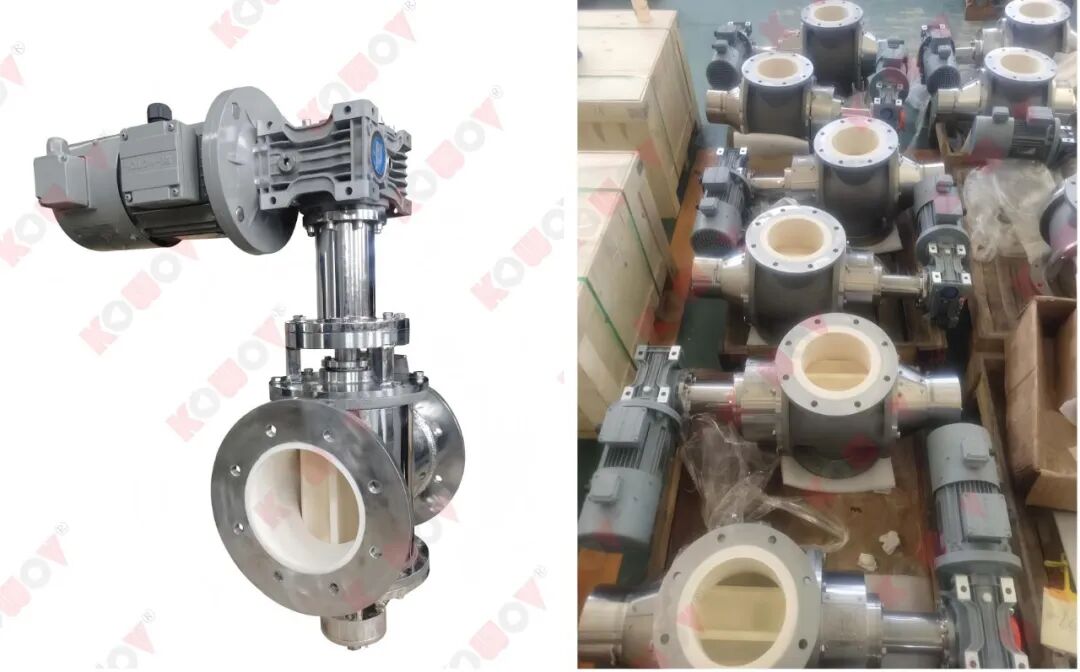 To overcome these problems, Ceramic Rotary Valves adopt advanced Ceramic Materials and optimized structural design, achieving comprehensive adaptation to harsh working conditions.
Ceramic Material: The Dual Shield of Corrosion and Wear Resistance
Core components such as the valve housing and rotor are made from zirconia (ZrO₂) or 99% alumina (Al₂O₃) ceramics, offering:
- Superior Chemical Inertness:
Completely resistant to acidic or alkaline media during lithium salt production, preventing contamination and ensuring product purity. - Outstanding Hardness and Wear Resistance:
Zirconia Ceramics reach hardness above HRA92, alumina above HRA90, far exceeding that of cathode powders.
Even under continuous operation with NCM or LFP powders, wear is minimal (annual wear <0.1 mm), giving a service life 5–8 times longer than traditional metal valves.
4. Real-World Applications — From Frequent Maintenance to Long-Term Stability
Case 1: Lithium Hydroxide Feeding Line Upgrade
A lithium salt producer manufacturing high-purity lithium hydroxide used stainless steel valves that suffered corrosion and powder leakage, causing contamination.
In late 2021, the plant began trials with Ceramic Rotary Valves.
After 20+ months of continuous operation (as of October 2025), the ceramic valve rotors and housings remain in excellent condition —no visible wear or corrosion.
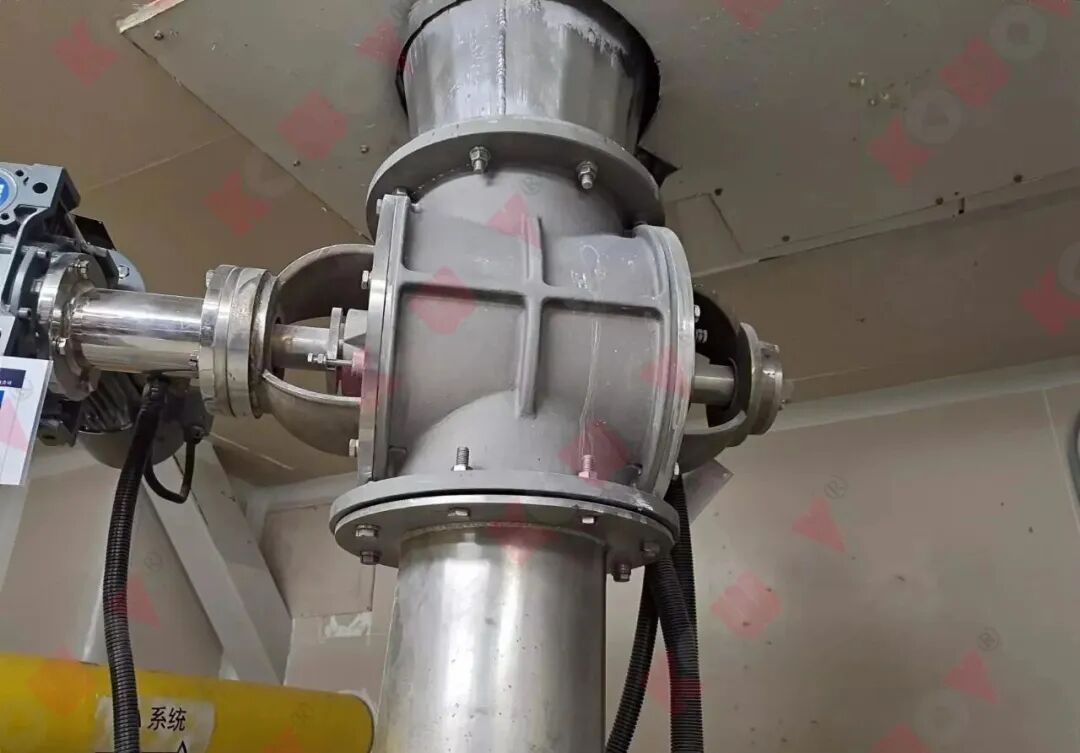 Case 2: LFP Cathode Powder Feeding System
A cathode materials manufacturer faced frequent leakage and magnetic contamination using stainless steel valves.
After installing ceramic rotary valves in January 2024 and optimizing the rotor structure, the company achieved stable discharge, eliminated magnetic contamination, extended maintenance cycles to 15 months, and significantly improved production efficiency.
5. Conclusion: A Key Device for High-Purity Lithium Battery Materials
In lithium salt and cathode material production, the discharge valve plays a decisive role in ensuring product purity, efficiency, and cost control.
The ceramic rotary discharge valve solves long-standing problems of corrosion, wear, leakage, and magnetic contamination found in traditional metal valves.
It is not just a replacement component — it’s a strategic investment toward achieving continuous, high-quality, and low-cost lithium material production.
By reducing material waste, lowering maintenance costs, and ensuring product purity, ceramic rotary valves have become an indispensable part of the new energy lithium battery supply chain.