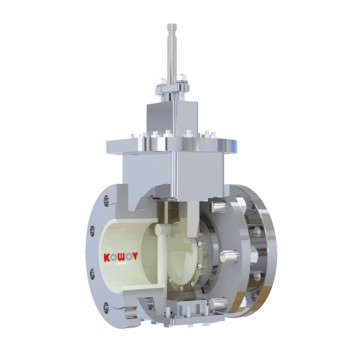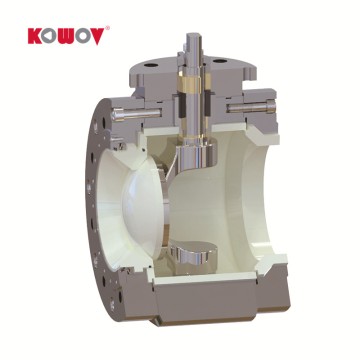
FCAV Ceramic Angle Valve
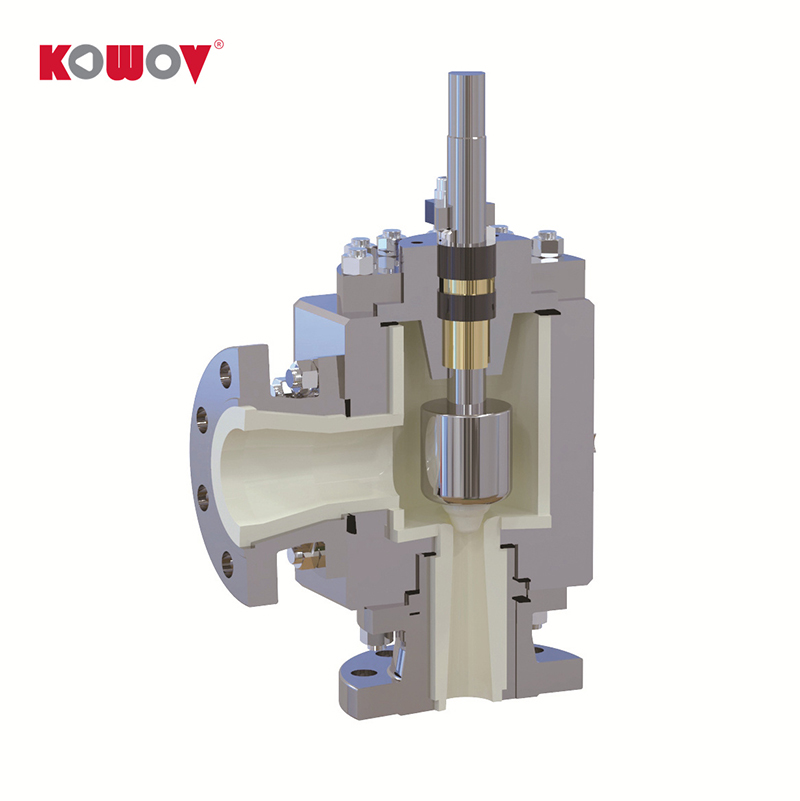
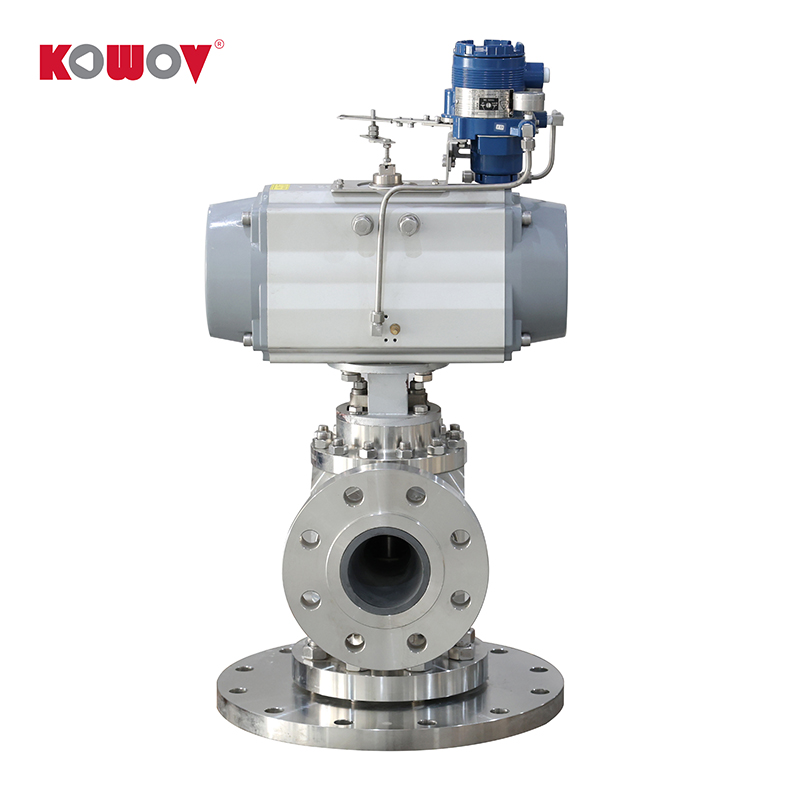
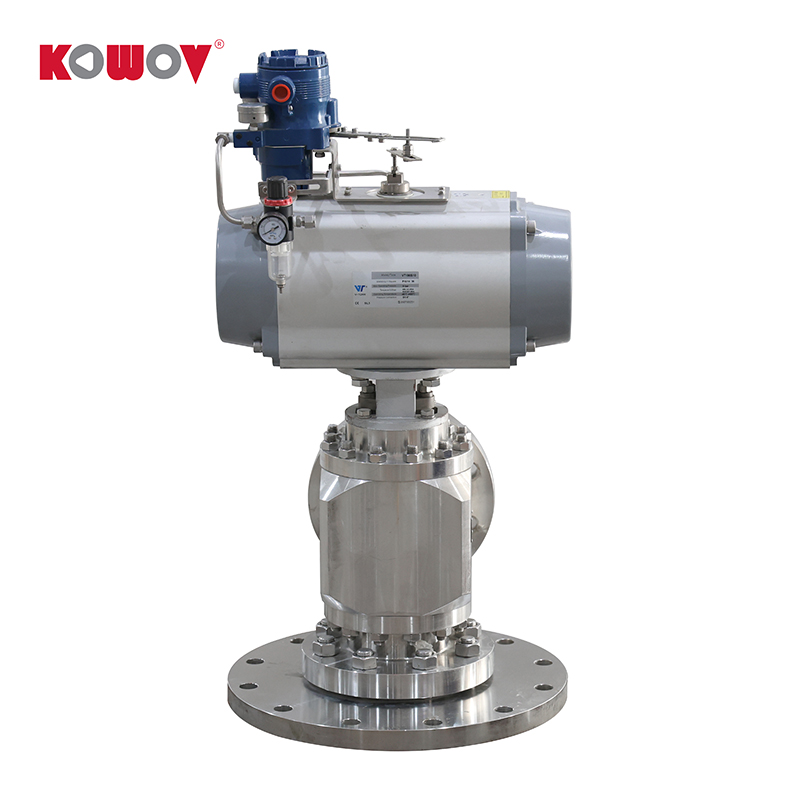
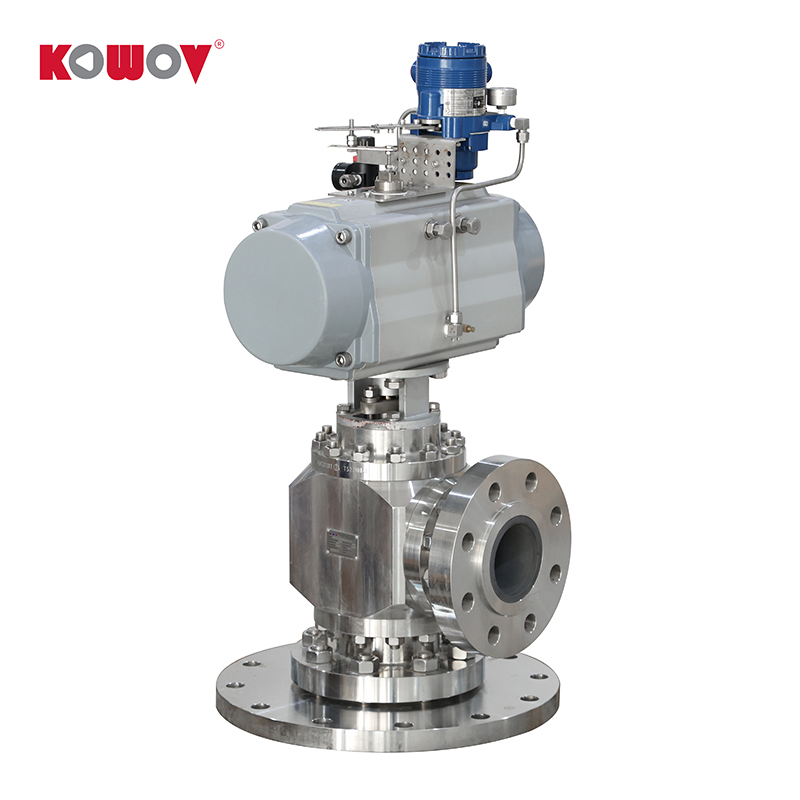
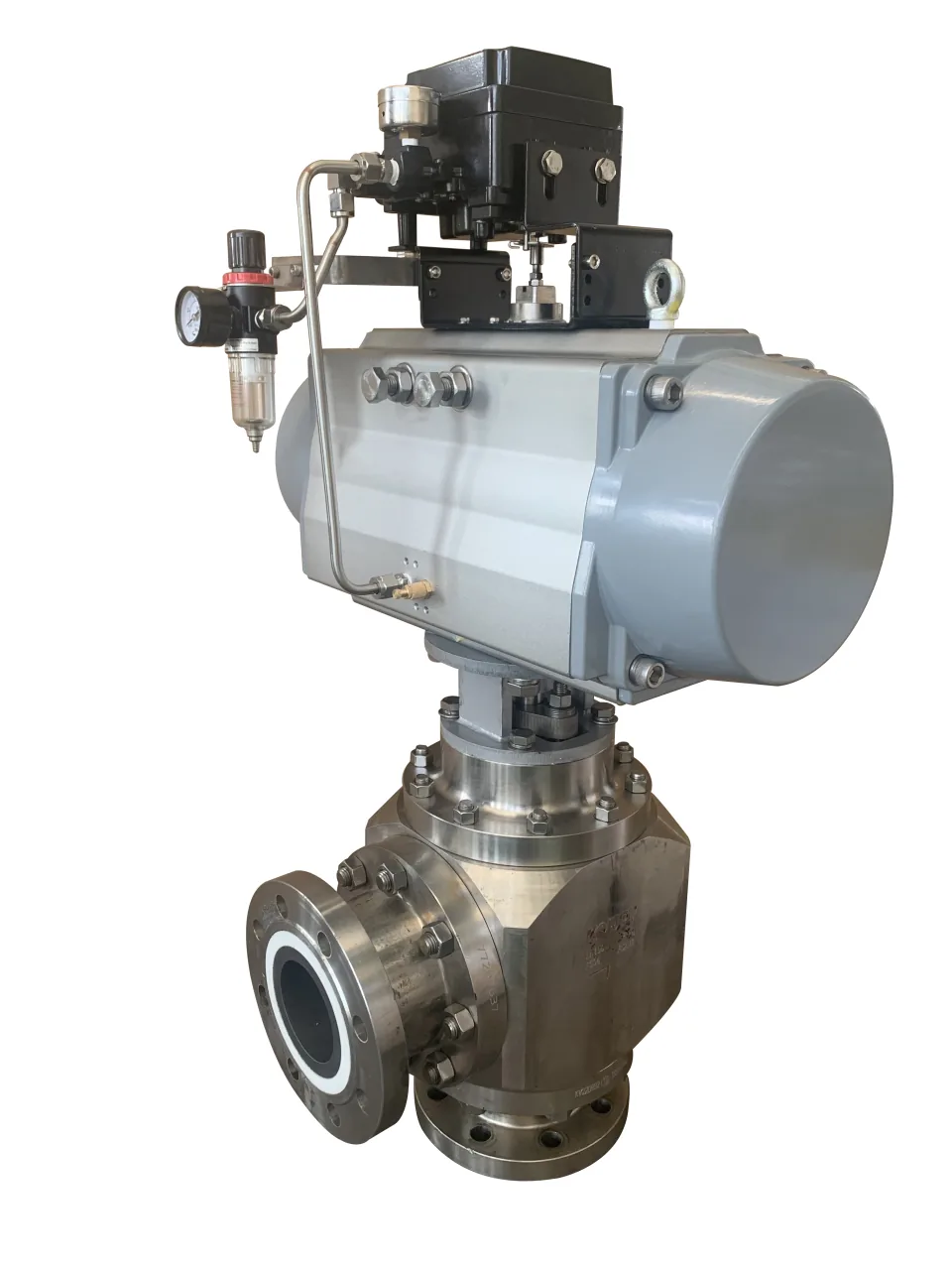
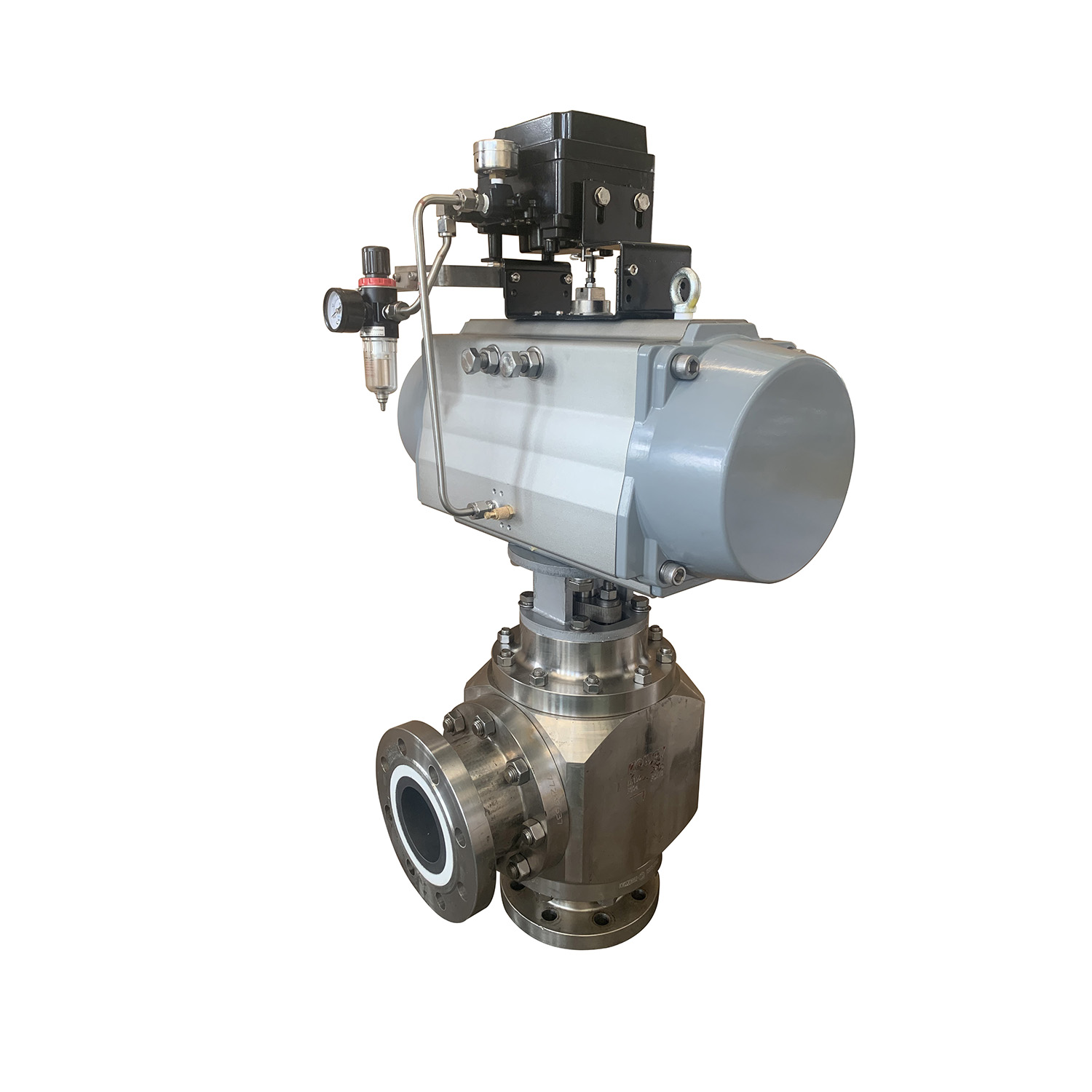
KOWOV manufactures the FCAV ceramic angle valve for flashing, erosive service such as coal-chemical black water and high-pressure leaching autoclave discharge. It is a 90° angle valve in which a rotating structural-ceramic core throttles and shuts off against a ceramic seat on a flat seal, with the remaining wetted flow path lined with ceramic
- Size range
- DN25-400
- Pressure rating
- Up to Class 900
- Temperature range
- -40 to 456 °C
Product overview
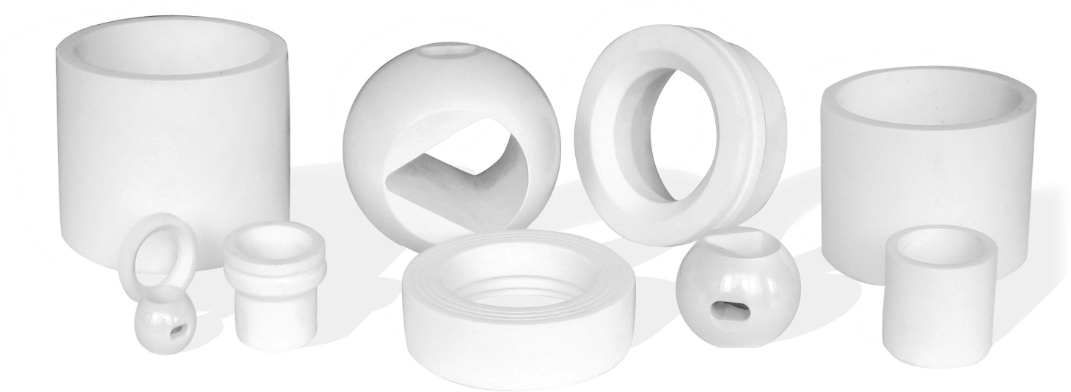
- Liquids that are both flash-prone and corrosive present particular challenges. For example, flash steam in steel valves induces both corrosion and erosion of the soft oxide layer generated by corrosion, producing damage greater than either mechanism alone. In such cases, structural ceramics with inherent corrosion and wear resistance provide an solutionThe sealing pair and fixed circular-plate seat are structural ceramic. The compact body has low operating torque and a self-cleaning flow path. The rotary geometry is intended to limit vibration, scratching and sticking between the core and seat
Design and construction
- Both the valve core and seat have flow channels, creating a planar seal at the edges of the valve core and seat flow channel holes. The valve core rotates relative to the seat to achieve throttling, opening, and closing of the fluidThe valve is quarter-turn, allowing for direct installation of quarter-turn actuators. This reduces the overall dimensions compared to linear actuators, thereby reducing the valve's installation spaceEach valve seat and valve core are paired and ground to ensure the valve's sealing performanceThe valve core and seat are always in close contact, preventing high-frequency vibration and avoiding valve core fracture due to such vibrationsThe valve core and seat are made of structural ceramics, and the remaining flow channels are lined with ceramics, providing corrosion, wear, and erosion resistance, greatly extending the valve's service lifeA wide spiral-wound gasket sits in a tongue-and-groove joint to seal the casing under pipe load and thermal cyclingThe packing box uses a live-load arrangement to maintain packing force as wear occurs
Applications
- Ceramic angle valves are intended for flashing, corrosive service where lower flow velocity and fewer direction changes can reduce particle impactCoal Chemical Industry: Black water angle valveHydrometallurgy:
Discharge pipeline from high-pressure leaching autoclave to flash tank
Exhaust pipeline from high-pressure leaching autoclave
Pipeline from flash tank to adjustment tank
Controls high-pressure autoclave pressure and slurry discharge volume
Technical data
| Item | Y-ZrO Y-TZP | Mg-ZrO₂ M-PSZ | 90 Al₂O₃ | 95 Al₂O₃ | 99 Al₂O₃ | Si₃N₄ | SiC | Common ceramics | Carbide alloy | 45# Steel |
|
Density g/cm³ |
6.0~6.05 | 5.72~5.74 | 3.45~3.55 | 3.6~3.75 | 3.9~3.95 | 3.2~3.33 | 3.15~3.25 | 3.0~3.5 | 14~18 | 7.8 |
|
Hardness HRA/C |
87 | 85 | 90 | 90 | 92 | 92 | 94 | 50~60 | 70 | 36 |
|
Flexural Strength MPa |
1150 | 900 | 350 | 370 | 450 | 1200 | 470 | 20~50 | 2000 | 804 |
|
Fracture Toughness (KIC) MPa√m |
10~12 | 13~15 | 3.4 | 3.6 | 4.5 | 7 | 4 | -- | 20 | 101 |
|
Compressive Strength MPa |
2000 | 1800 | 1700 | 2000 | 2200 | 2800 | -- | -- | 4000 | 2000 |
|
Thermal Shock Resistance °C |
87 | 110 | -- | -- | 50 | 200 | 75 | -- | 500 | 500 |
|
Thermal Expansion Coefficient ×10⁻⁶/°C |
9.6 | 10 | 7.6 | 7.8 | 8.3 | 3.4 | 4 | -- | 7 | 12 |
|
Modulus of Elasticity GPa |
200 | 200 | 310 | 330 | 350 | 300 | 400 | -- | 600 | -- |
|
Crushing Load KN (Φ6mm) |
15 | 10 | 3.5 | 3.6 | 4 | 18 | 3.5 | -- | -- | -- |
|
Using Temperature °C |
<160 | <1000 | <1200 | <1250 | <1500 | <1500 | <1500 | -- | -- | <560 |
|
Water Absorption |
0 | 0 | 0.02% | 0.01% | 0.00% | 0 | 0.50% | 5~10% | -- | -- |
|
Corrosion Prevention |
Good | Good | Good | Good | Good | Good | Good | Poor | Good | Poor |
| Media | Temperature | ZrO₂ | 99.9% Al₂O₃ | SiC | Si₃N₄ | Graphite | PTFE | Fluororubber | SS304 | SS316 | HC |
| 20% HCL | 60°C | A | A | A | B | A | A | A | C | C | B |
| 20% HCL | 95°C | A | A | A | C | A | A | A | -- | -- | C |
| 90% H₂SO₄ | 60°C | A | A | A | A | A | A | A | C | C | B |
| 90% H₂SO₄ | 95°C | A | A | A | B | A | A | A | C | C | C |
| 60% H₃PO₄ | 60°C | A | A | A | C | A | A | A | C | C | A |
| 60% H₃PO₄ | 95°C | A | A | A | C | A | A | A | C | C | A |
| 10% HF | 60°C | C | B | A | A | A | A | A | C | C | B |
| 46% HF | 95°C | C | C | A | C | A | A | A | -- | -- | C |
| 60% HNO₃ | 60°C | A | A | A | C | B | A | A | A | A | C |
| 60% HNO₃ | 95°C | A | B | A | C | B | A | A | B | B | C |
| 30% NaOH | 60°C | A | B | A | B | A | A | A | A | A | A |
| 30% NaOH | 95°C | B | B | A | C | A | A | A | A | B | A |
Contact Us
Send the medium, temperature, pressure, nominal size, solids, actuation and current failure mode. The engineering team will review the duty before recommending a valve
Send an enquiry about FCAV