FEBV Ceramic Eccentric Butterfly Valve
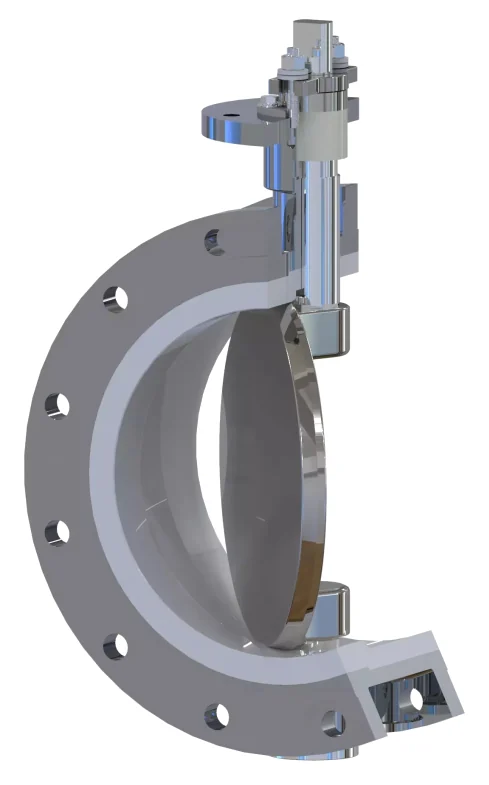
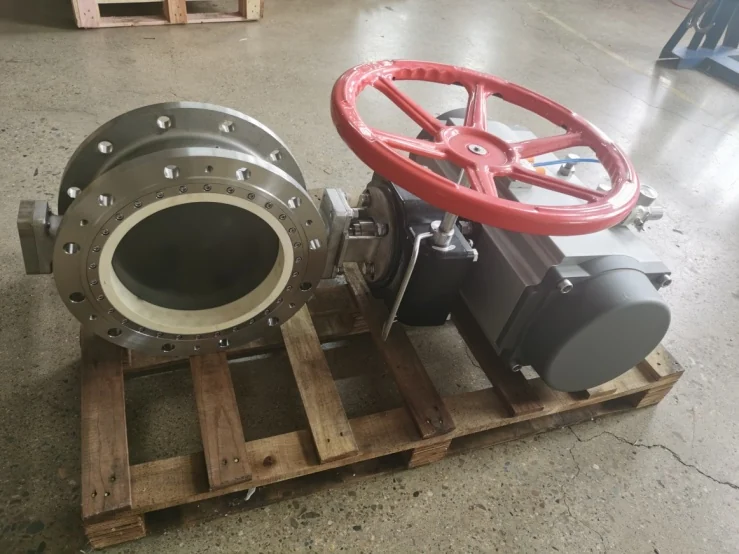
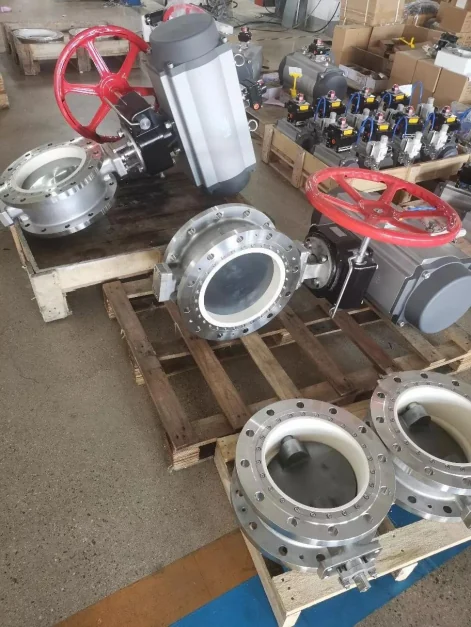
KOWOV manufactures the FEBV ceramic eccentric butterfly valve for gas-solid mixtures and slurries that carry hard particles. It keeps the compact build of a metal hard-seated butterfly valve but seals on a structural-ceramic seat, so erosion and corrosion do not wear the sealing faces away
- Size range
- DN100-450 (4″-18″)
- Pressure rating
- PN10-16 / Class 150
- Temperature range
- -40 to 240 °C
- Sealing class
- ≥ Class IV
- Supply
- Made to order
Design and construction
- Eccentric disc: the disc leaves the seat the moment the valve starts to open, so the sealing faces do not rub through the stroke and the opening torque stays low
- Seals tighter as it closes: the eccentric geometry compresses the disc seal against the seat on closing, and the valve seals against pressure from either direction
- Shearing closure: on closing, the disc seal ring and the seat shear through particles and fibres, so trapped solids do not jam the valve or hold it open
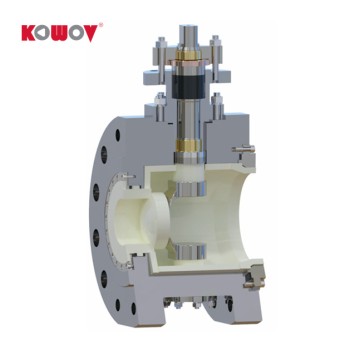
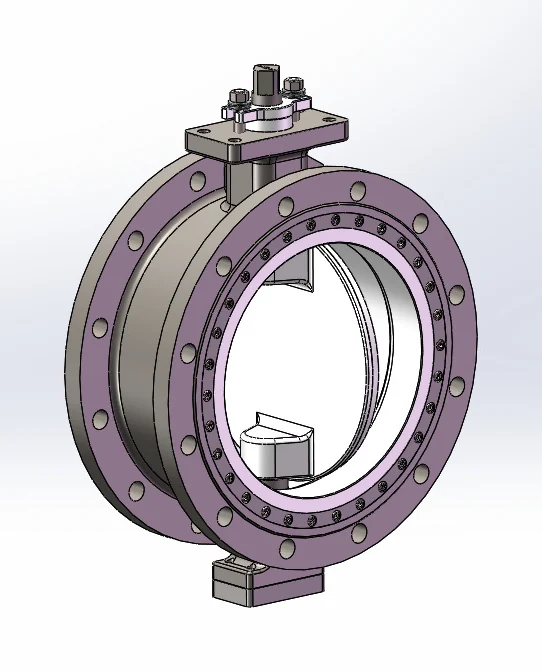
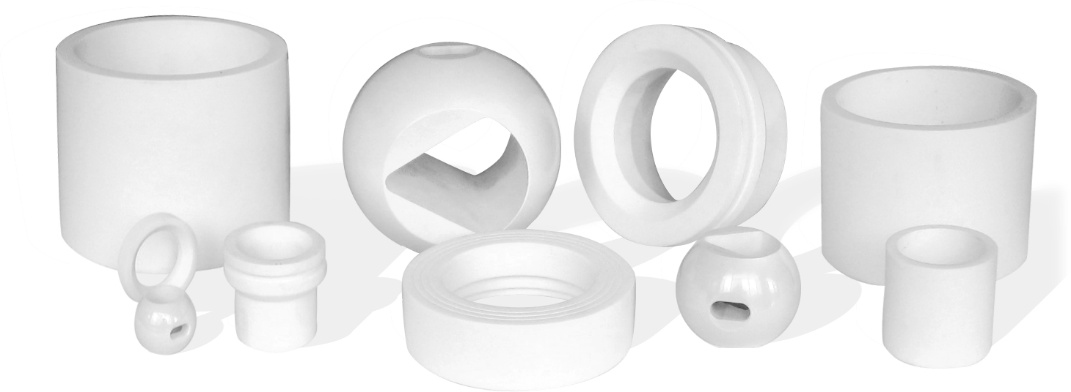
- Ceramic seat and liner: the seat and the body liner are structural ceramic, zirconia or 99% alumina chosen for the duty. The disc is CF8, CF8M or titanium alloy with a sprayed tungsten-carbide surface
- Live-loaded packing: disc springs keep the packing load constant as the packing wears
- Quick, low-torque operation: because the disc clears the seat at once, the valve responds quickly, suits frequent on-off cycling and can take a smaller actuator, which matters most at large sizes
- Compact and light: shorter and lighter than a gate or globe valve of the same size, which saves installation space and pipe-support load
- An economical alternative: the ceramic-lined flow path keeps the medium away from the body, which makes the valve an economical replacement for butterfly valves made of expensive alloys
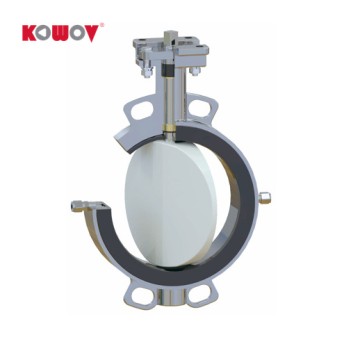
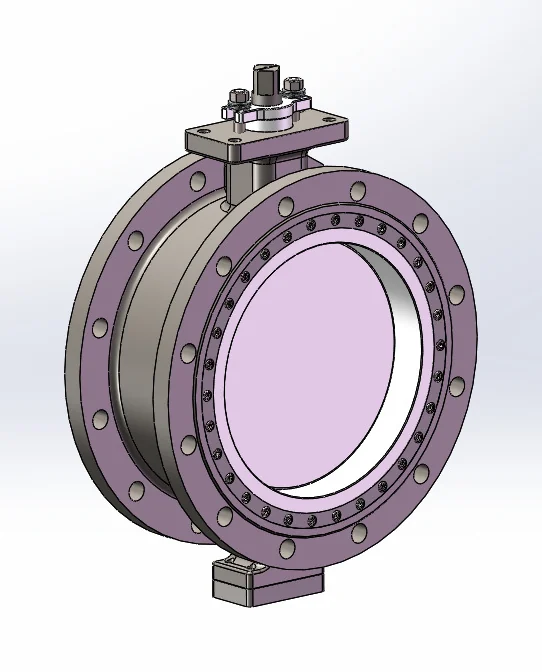
Open and closed positions: the disc swings clear of the ceramic seat as the valve opens and seals on it as the valve closes
Applications
- Gas-solid mixtures and slurries carrying hard particles, where the sealing faces of metal hard-seated butterfly valves erode and the valve starts to leak
- On-off positions that cycle often and need a quick, low-torque valve
- Each duty is reviewed with the medium, solids, temperature, pressure and actuation before the configuration is confirmed
Technical data
Parameters
| Item | Value |
|---|---|
| Size range | DN100-450 (4″-18″) |
| Nominal pressure | PN10-16 / Class 150 |
| Temperature | -40 to 240 °C |
| Sealing class | ANSI Class IV or better |
| Seat | Structural ceramic: zirconia or 99% alumina |
| Disc | CF8, CF8M or titanium alloy, each with a sprayed tungsten-carbide surface |
Main parts and materials
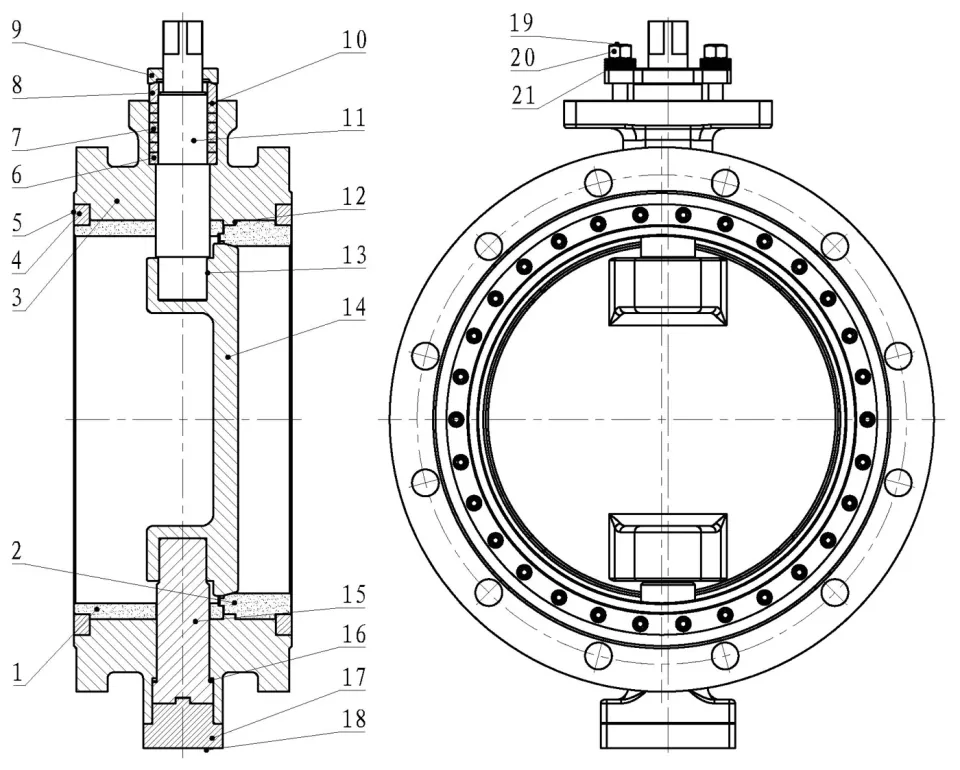
| No. | Part | Qty | Material |
|---|---|---|---|
| 1 | Body liner | 1 | Structural ceramic |
| 2 | Seat | 1 | Structural ceramic |
| 3 | Body | 1 | CF8 |
| 4 | Liner retaining ring | 2 | 304 |
| 5 | Socket head cap screw | 60 | A2-70 |
| 6 | Retaining ring | 1 | 304 |
| 7 | Packing set | 1 | Graphite |
| 8 | Packing follower | 1 | 304 |
| 9 | Gland plate | 1 | CF8 |
| 10 | Packing washer | 2 | 304 |
| 11 | Stem | 1 | Titanium alloy |
| 12 | Adjusting shim | 6 | 304 |
| 13 | Dowel pin | 1 | Titanium alloy |
| 14 | Disc | 1 | Titanium alloy with sprayed tungsten carbide |
| 15 | Lower shaft | 1 | Titanium alloy |
| 16 | Flexible graphite seal | 1 | Graphite |
| 17 | Bottom cover | 1 | 304 |
| 18 | Socket head cap screw | 4 | A2-70 |
| 19 | Fully threaded stud | 2 | 0Cr18Ni9 |
| 20 | Hex nut | 2 | A2-70 |
| 21 | Disc spring | 8 | 17-7PH |
Materials as listed for the titanium-alloy configuration; the body, disc and stem materials follow the order
Dimensions
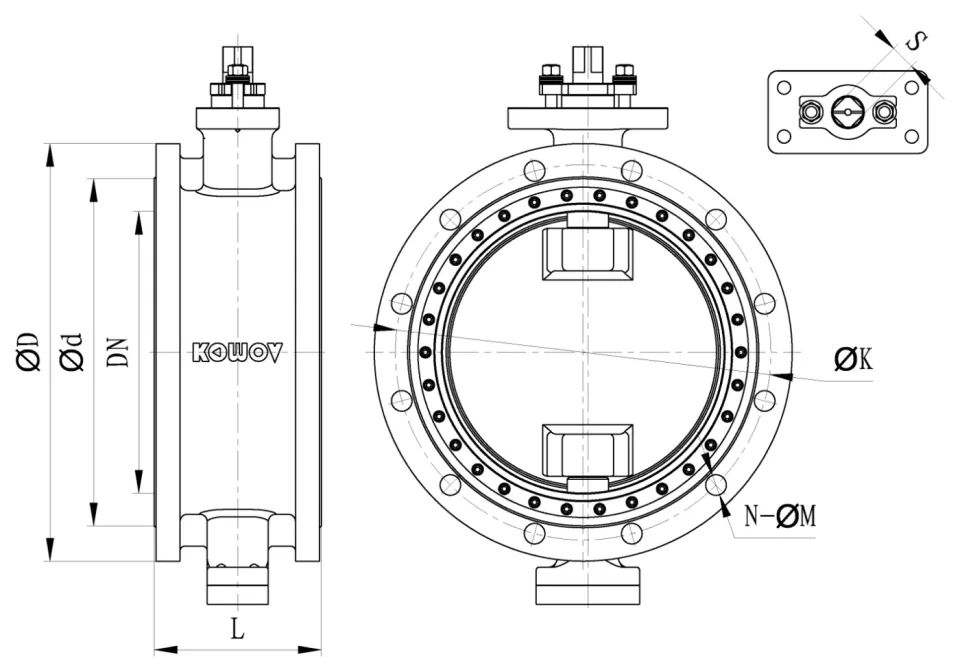
Dimensions in mm. D flange outside diameter, d sealing-face diameter, L face-to-face length, K bolt-circle diameter, N number of bolt holes, M bolt-hole diameter, S stem across flats
PN10
| DN | Inch | D | d | L | K | N | M | S |
|---|---|---|---|---|---|---|---|---|
| 100 | 4″ | 220 | 158 | 127 | 180 | 8 | 18 | 14 |
| 125 | 5″ | 250 | 188 | 140 | 210 | 8 | 18 | 19 |
| 150 | 6″ | 285 | 212 | 140 | 240 | 8 | 22 | 19 |
| 200 | 8″ | 340 | 268 | 152 | 295 | 8 | 22 | 22 |
| 250 | 10″ | 395 | 320 | 165 | 350 | 12 | 22 | 22 |
| 300 | 12″ | 445 | 370 | 178 | 400 | 12 | 22 | 27 |
| 350 | 14″ | 505 | 430 | 190 | 460 | 16 | 22 | 36 |
| 400 | 16″ | 565 | 482 | 216 | 515 | 16 | 26 | 36 |
| 450 | 18″ | 615 | 532 | 222 | 565 | 20 | 26 | 36 |
PN16
| DN | Inch | D | d | L | K | N | M | S |
|---|---|---|---|---|---|---|---|---|
| 100 | 4″ | 220 | 158 | 127 | 180 | 8 | 18 | 14 |
| 125 | 5″ | 250 | 188 | 140 | 210 | 8 | 18 | 19 |
| 150 | 6″ | 285 | 212 | 140 | 240 | 8 | 22 | 19 |
| 200 | 8″ | 340 | 268 | 152 | 295 | 12 | 22 | 22 |
| 250 | 10″ | 405 | 320 | 165 | 355 | 12 | 26 | 22 |
| 300 | 12″ | 460 | 378 | 178 | 410 | 12 | 26 | 27 |
| 350 | 14″ | 520 | 438 | 190 | 470 | 16 | 26 | 36 |
| 400 | 16″ | 580 | 490 | 216 | 525 | 16 | 30 | 36 |
| 450 | 18″ | 640 | 550 | 222 | 585 | 20 | 30 | 36 |
| Item | Y-ZrO Y-TZP | Mg-ZrO₂ M-PSZ | 90 Al₂O₃ | 95 Al₂O₃ | 99 Al₂O₃ | Si₃N₄ | SiC | Common ceramics | Carbide alloy | 45# Steel |
|
Density g/cm³ |
6.0~6.05 | 5.72~5.74 | 3.45~3.55 | 3.6~3.75 | 3.9~3.95 | 3.2~3.33 | 3.15~3.25 | 3.0~3.5 | 14~18 | 7.8 |
|
Hardness HRA/C |
87 | 85 | 90 | 90 | 92 | 92 | 94 | 50~60 | 70 | 36 |
|
Flexural Strength MPa |
1150 | 900 | 350 | 370 | 450 | 1200 | 470 | 20~50 | 2000 | 804 |
|
Fracture Toughness (KIC) MPa√m |
10~12 | 13~15 | 3.4 | 3.6 | 4.5 | 7 | 4 | -- | 20 | 101 |
|
Compressive Strength MPa |
2000 | 1800 | 1700 | 2000 | 2200 | 2800 | -- | -- | 4000 | 2000 |
|
Thermal Shock Resistance °C |
87 | 110 | -- | -- | 50 | 200 | 75 | -- | 500 | 500 |
|
Thermal Expansion Coefficient ×10⁻⁶/°C |
9.6 | 10 | 7.6 | 7.8 | 8.3 | 3.4 | 4 | -- | 7 | 12 |
|
Modulus of Elasticity GPa |
200 | 200 | 310 | 330 | 350 | 300 | 400 | -- | 600 | -- |
|
Crushing Load KN (Φ6mm) |
15 | 10 | 3.5 | 3.6 | 4 | 18 | 3.5 | -- | -- | -- |
|
Using Temperature °C |
<160 | <1000 | <1200 | <1250 | <1500 | <1500 | <1500 | -- | -- | <560 |
|
Water Absorption |
0 | 0 | 0.02% | 0.01% | 0.00% | 0 | 0.50% | 5~10% | -- | -- |
|
Corrosion Prevention |
Good | Good | Good | Good | Good | Good | Good | Poor | Good | Poor |
| Media | Temperature | ZrO₂ | 99.9% Al₂O₃ | SiC | Si₃N₄ | Graphite | PTFE | Fluororubber | SS304 | SS316 | HC |
| 20% HCL | 60°C | A | A | A | B | A | A | A | C | C | B |
| 20% HCL | 95°C | A | A | A | C | A | A | A | -- | -- | C |
| 90% H₂SO₄ | 60°C | A | A | A | A | A | A | A | C | C | B |
| 90% H₂SO₄ | 95°C | A | A | A | B | A | A | A | C | C | C |
| 60% H₃PO₄ | 60°C | A | A | A | C | A | A | A | C | C | A |
| 60% H₃PO₄ | 95°C | A | A | A | C | A | A | A | C | C | A |
| 10% HF | 60°C | C | B | A | A | A | A | A | C | C | B |
| 46% HF | 95°C | C | C | A | C | A | A | A | -- | -- | C |
| 60% HNO₃ | 60°C | A | A | A | C | B | A | A | A | A | C |
| 60% HNO₃ | 95°C | A | B | A | C | B | A | A | B | B | C |
| 30% NaOH | 60°C | A | B | A | B | A | A | A | A | A | A |
| 30% NaOH | 95°C | B | B | A | C | A | A | A | A | B | A |
Contact Us
Send the medium, its solids content and hardness, the temperature, pressure, nominal size, actuation and how often the valve cycles. Our engineers will review the duty before recommending a configuration
Send an enquiry about FEBV