FERV Ceramic Rotary Valve
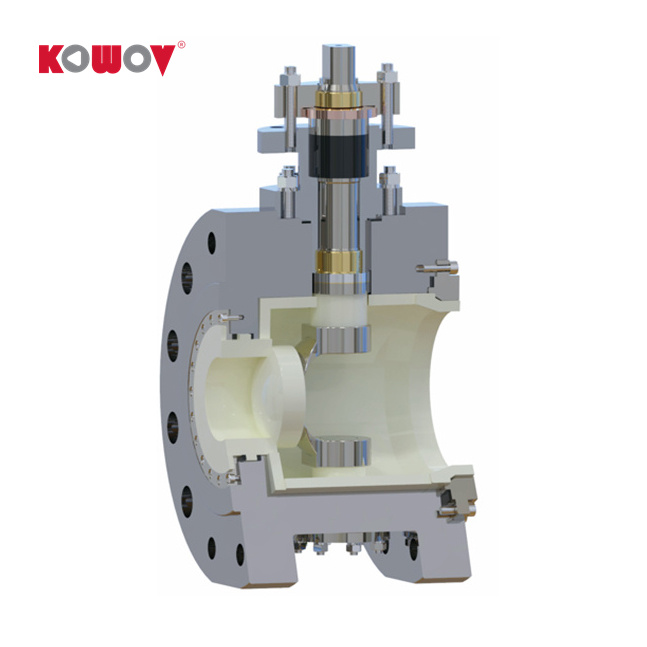
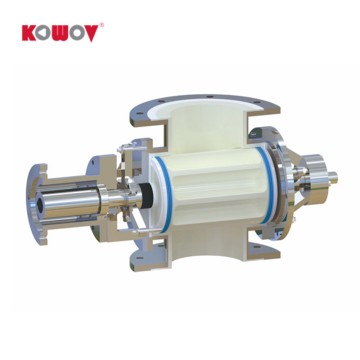
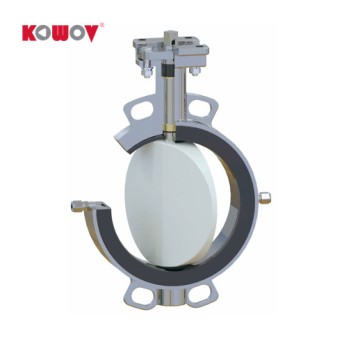
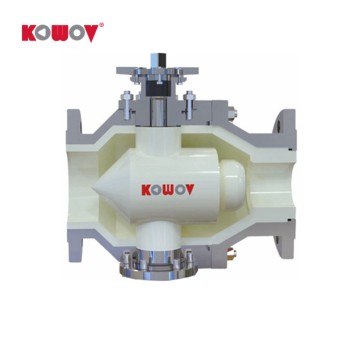
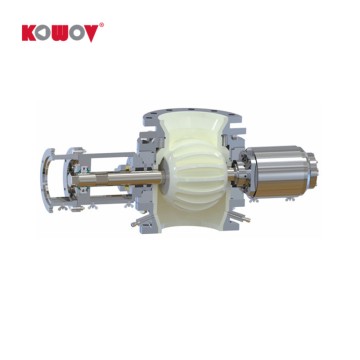
KOWOV manufactures the FERV ceramic eccentric rotary valve for isolation and regulation of slurries and multiphase media in coal-chemical, aluminium, pulp and paper and petrochemical plants. It handles viscous, scaling, crystallizing or contaminated service; its ceramic-lined flow path, eccentric rotor and spherical compression seat are described below
- Size range
- DN25-400
- Pressure rating
- Class 150-900
- Temperature range
- -40 to 456 °C
Overview and construction
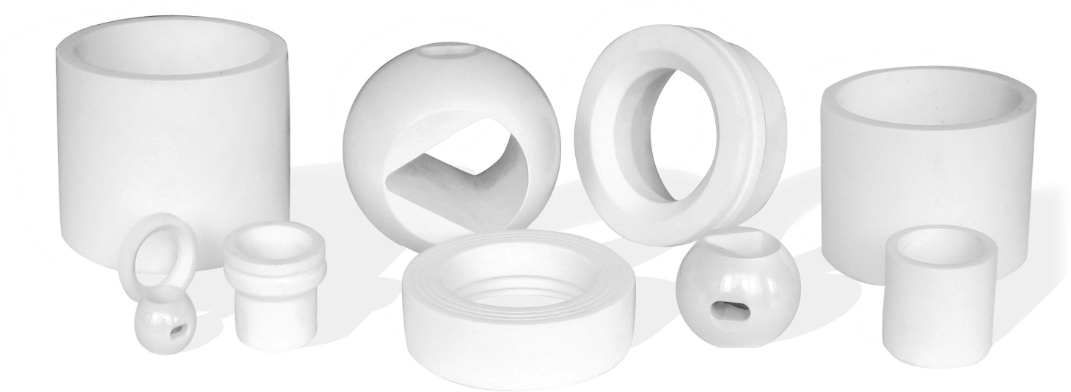
Full Ceramic Lining & Self-Cleaning: All internal surfaces are fully lined with ceramic, with no dead spaces or corners, providing self-cleaning and making the valve suited to crystallizing, scaling, sticky, or contaminated media
Simple Flow Path & Low Resistance: Ensures high flow capacity and efficient operation, minimizing erosion. At 90° full open, the valve core and pivot are positioned outside the flow path, while the stem and pivot are protected by ceramic sleeves
Wide Adjustable Range & High Kv Value: Offers precise control over flow rates, with an adjustable ratio of up to 200
Torque-Sealed, Forced Sealing Design: High shut-off performance with reduced friction between the rotor and valve seat, minimizing wear on sealing surfaces
Spherical Compression Seat: breaks up crystallized or sticky materials, enhancing performance in challenging media
Lightweight & Energy Efficient: Lighter than same-size ball valves, allowing actuators to operate with lower output torque, weight, and cost
Bidirectional Sealing: Seals in both directions and can be installed flow-to-open or flow-to-close; flow-to-close is recommended for heavy erosion
Applications
Coal Chemical Industry: Black and grey water control valves; quench water flow control valves
Non-Ferrous Metals Industry: Aluminum processing
Pulp & Paper Industry: Control of coatings or other additives in paper machines
Petrochemical Industry: Oil slurry and residue pipelines
Technical data
| Item | Y-ZrO Y-TZP | Mg-ZrO₂ M-PSZ | 90 Al₂O₃ | 95 Al₂O₃ | 99 Al₂O₃ | Si₃N₄ | SiC | Common ceramics | Carbide alloy | 45# Steel |
|
Density g/cm³ |
6.0~6.05 | 5.72~5.74 | 3.45~3.55 | 3.6~3.75 | 3.9~3.95 | 3.2~3.33 | 3.15~3.25 | 3.0~3.5 | 14~18 | 7.8 |
|
Hardness HRA/C |
87 | 85 | 90 | 90 | 92 | 92 | 94 | 50~60 | 70 | 36 |
|
Flexural Strength MPa |
1150 | 900 | 350 | 370 | 450 | 1200 | 470 | 20~50 | 2000 | 804 |
|
Fracture Toughness (KIC) MPa√m |
10~12 | 13~15 | 3.4 | 3.6 | 4.5 | 7 | 4 | -- | 20 | 101 |
|
Compressive Strength MPa |
2000 | 1800 | 1700 | 2000 | 2200 | 2800 | -- | -- | 4000 | 2000 |
|
Thermal Shock Resistance °C |
87 | 110 | -- | -- | 50 | 200 | 75 | -- | 500 | 500 |
|
Thermal Expansion Coefficient ×10⁻⁶/°C |
9.6 | 10 | 7.6 | 7.8 | 8.3 | 3.4 | 4 | -- | 7 | 12 |
|
Modulus of Elasticity GPa |
200 | 200 | 310 | 330 | 350 | 300 | 400 | -- | 600 | -- |
|
Crushing Load KN (Φ6mm) |
15 | 10 | 3.5 | 3.6 | 4 | 18 | 3.5 | -- | -- | -- |
|
Using Temperature °C |
<160 | <1000 | <1200 | <1250 | <1500 | <1500 | <1500 | -- | -- | <560 |
|
Water Absorption |
0 | 0 | 0.02% | 0.01% | 0.00% | 0 | 0.50% | 5~10% | -- | -- |
|
Corrosion Prevention |
Good | Good | Good | Good | Good | Good | Good | Poor | Good | Poor |
| Media | Temperature | ZrO₂ | 99.9% Al₂O₃ | SiC | Si₃N₄ | Graphite | PTFE | Fluororubber | SS304 | SS316 | HC |
| 20% HCL | 60°C | A | A | A | B | A | A | A | C | C | B |
| 20% HCL | 95°C | A | A | A | C | A | A | A | -- | -- | C |
| 90% H₂SO₄ | 60°C | A | A | A | A | A | A | A | C | C | B |
| 90% H₂SO₄ | 95°C | A | A | A | B | A | A | A | C | C | C |
| 60% H₃PO₄ | 60°C | A | A | A | C | A | A | A | C | C | A |
| 60% H₃PO₄ | 95°C | A | A | A | C | A | A | A | C | C | A |
| 10% HF | 60°C | C | B | A | A | A | A | A | C | C | B |
| 46% HF | 95°C | C | C | A | C | A | A | A | -- | -- | C |
| 60% HNO₃ | 60°C | A | A | A | C | B | A | A | A | A | C |
| 60% HNO₃ | 95°C | A | B | A | C | B | A | A | B | B | C |
| 30% NaOH | 60°C | A | B | A | B | A | A | A | A | A | A |
| 30% NaOH | 95°C | B | B | A | C | A | A | A | A | B | A |
Technical resources
- Ceramic Valve Solutions for Black Water Flashing Systems
- Ceramic Valve Solutions for Coal Gasification
- Ceramic Valve Solutions for Slag and Gray Water Recirculation
- Ceramic Eccentric Rotary Valve FERV Data Sheet (PDF)
- Ceramic Eccentric Rotary Valve FERV General Arrangement (PDF)
- What determines the assembled valve temperature limit?
- All documents, drawings and certificates
Contact Us
Send the medium, temperature, pressure, nominal size, solids, actuation and current failure mode. The engineering team will review the duty before recommending a valve
Send an enquiry about FERV