Feeding lithium salts and cathode powders
Why ceramic rotary valve design matters when precise feeding, powder flow and magnetic contamination all enter the specification
On this page
A powder feeder can keep turning while its performance changes. Wear can increase internal clearances. Material can build up in a pocket. A contact surface can contribute particles that the process is trying to keep out of the finished product.
In lithium-salt and cathode-material production, those changes affect more than maintenance. They can alter feed consistency and complicate contamination control. The valve enquiry needs to describe both.
Begin with the feeding mechanism
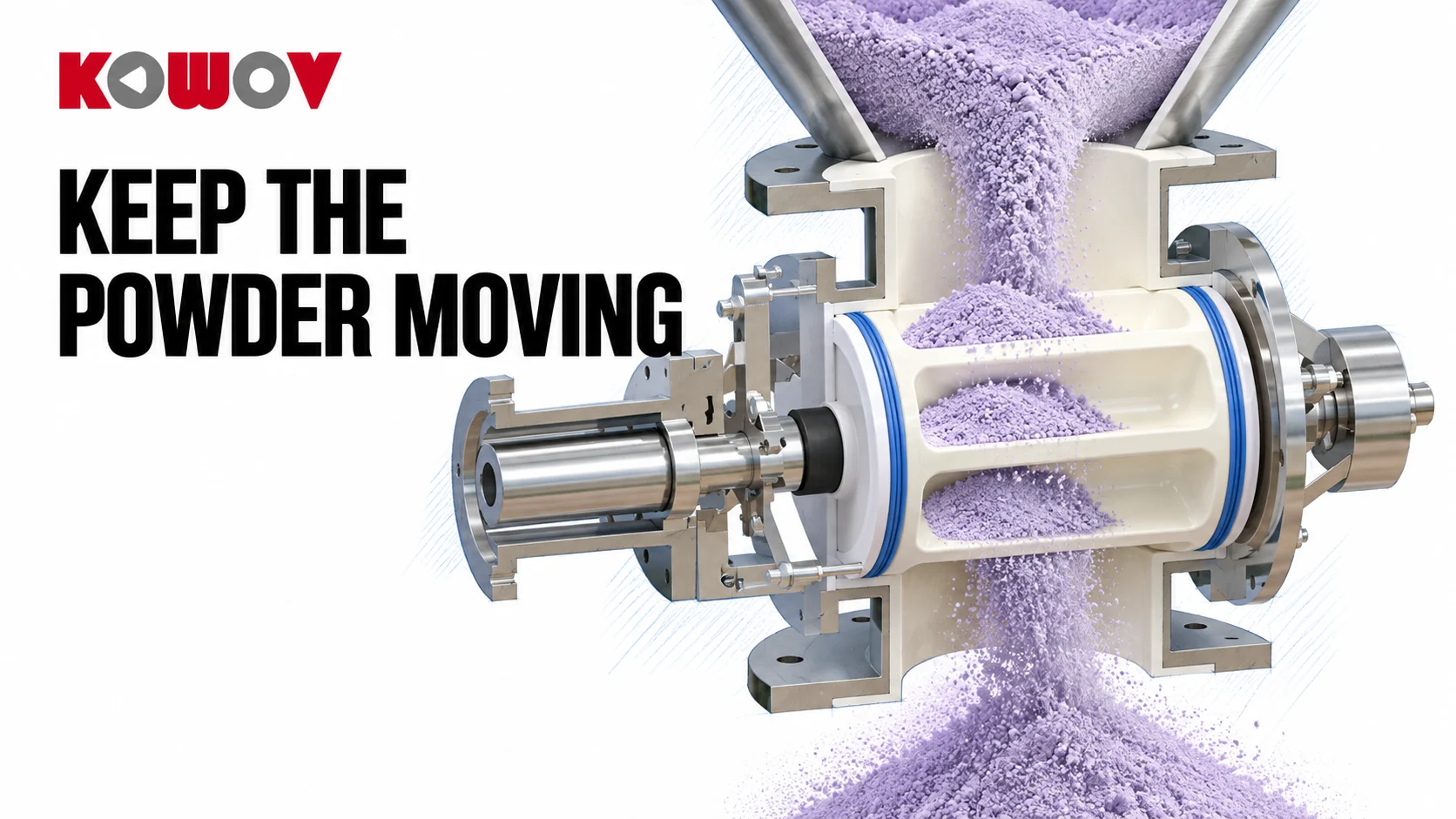
The ESFV1 ceramic rotary feeder uses a star-shaped rotor to move material from a top inlet to a bottom outlet. Rotor speed adjusts the feed rate. The pocket geometry, powder behavior and pressure conditions determine how that arrangement performs in the process.
This is a different job from opening and closing a ball valve. A rotary feeder should not be assumed to provide the same isolation performance as a specified shutoff valve. Where the process also requires isolation or pressure separation, state those requirements explicitly.
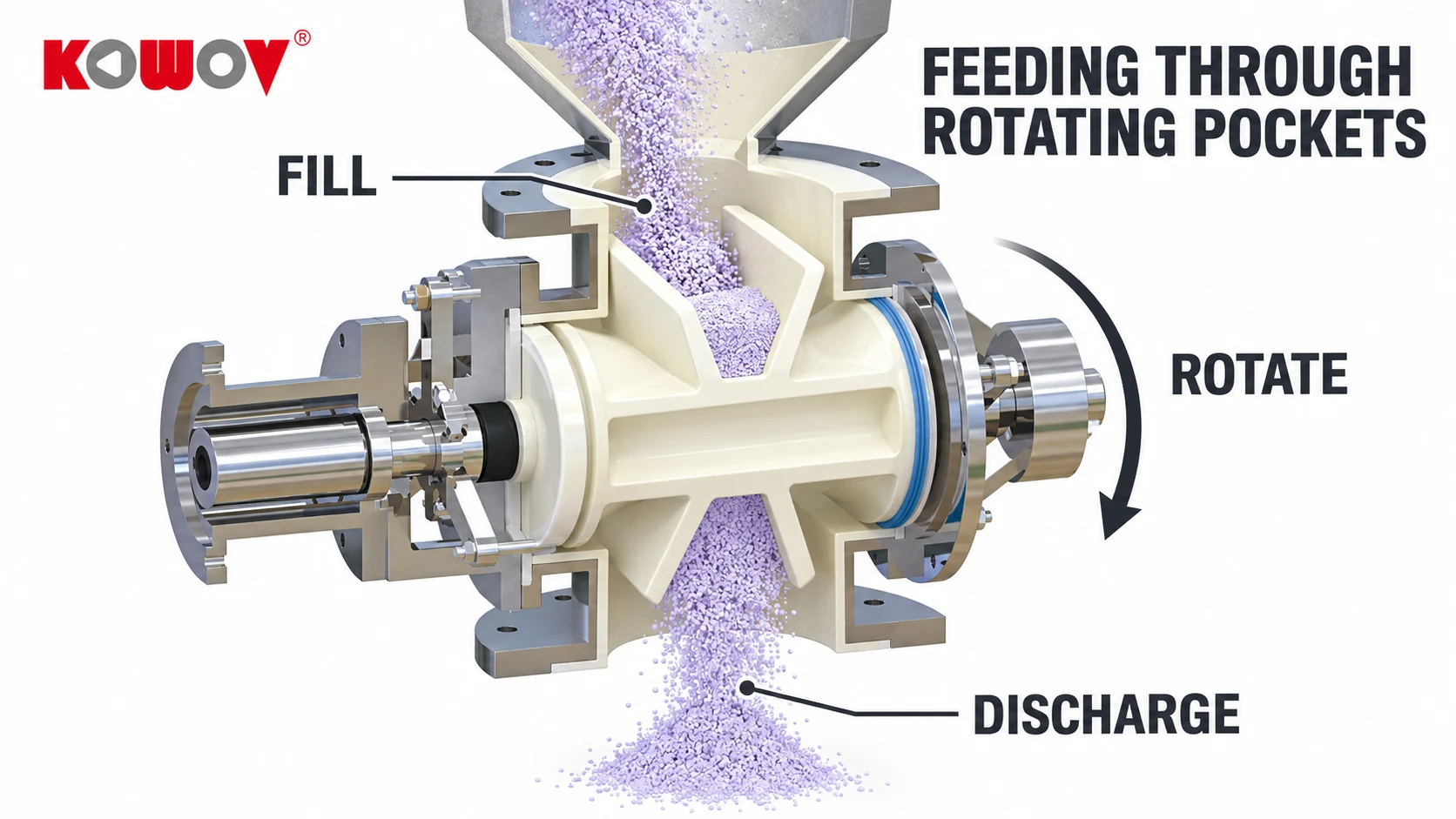
Powder behavior belongs in the specification
Lithium salts and cathode powders vary in particle size, bulk density, moisture and tendency to adhere or agglomerate. Residual liquid chemistry may also affect the wetted materials. A broad product name such as “LFP powder” leaves these operating details unresolved.
For the feed calculation, KOWOV needs the required throughput and the actual bulk behavior of the material. For wear and blockage, particle characteristics and the operating cycle matter. For cleaning, the frequency, method and acceptable retained material need to be agreed.
Ceramic contact surfaces can reduce exposure to metal wear in the selected part of the system. They do not establish that the entire production line is free of metallic or magnetic contamination. That requires the customer's acceptance limits and appropriate sampling across the relevant equipment.
What the application accounts record
KOWOV's lithium-hydroxide trials began in late 2021. The published follow-up records an inspected operating interval exceeding twenty months, with no visible corrosion or wear on the rotor and housing. Inspection of both surfaces matters: feed behavior depends on the working clearance between them.
A second account describes a cathode-powder installation in January 2024. After changes to the rotor arrangement, the customer reported steadier discharge and a maintenance interval of fifteen months. These observations support discussion of the feeding design, while product-purity acceptance still depends on measurement.
Make the trial measurable
Agree how feed stability will be assessed at the required rates and what leakage, dust escape or retained material is acceptable. Record the powder properties during the trial so that a change in moisture or bulk density is not mistaken for a valve change.
At inspection, examine the rotor and housing surfaces, clearances and deposits. If contamination is a critical requirement, specify the relevant test method and sampling locations before the trial begins.
Send the material description, temperature, pressure conditions, required throughput and contamination limits when requesting an ESFV1 quotation. KOWOV can use those details to review the construction, drive arrangement and service requirements as one feeding system.
Discuss your application
Send the powder properties, throughput and contamination limits