Where ceramic valves earn their place
Why ceramic trim helps in difficult media, how seven valve brands approach the problem, and where KOWOV’s ball, C-type, slide and feeding designs differ
On this page
The strongest reason to consider a ceramic valve is a recurring failure that the present construction cannot control. A slurry wears a sealing surface. Corrosion exposes the substrate beneath a coating. Crystals collect where the moving element needs clearance. Each problem calls for a different explanation of how the replacement will work.
Ceramic materials can be valuable where wear and chemical attack overlap. KOWOV's product range builds on that material advantage with several valve geometries. Understanding the distinction helps a buyer compare suppliers, choose a relevant product family and define a trial that produces useful evidence.
Start with the mechanism of failure
In an abrasive stream, hard particles repeatedly contact the ball, seat or lining. In corrosive service, the liquid chemistry can attack exposed materials. Where both occur, surface damage and chemical attack can reinforce each other. Suitable structural ceramics offer a way to protect the working surfaces, subject to the particular ceramic grade and medium.
Material selection still needs the acid or alkali concentration, contaminants, temperature and solids information. “Corrosion resistant” is not a blanket guarantee for every chemical mixture. The packing, secondary seals and metal pressure boundary also need to suit the service.
Deposits create a separate problem. A highly wear-resistant surface cannot make trapped, hardened material disappear. That is where cavity design, seating arrangement and the motion of the closure become decisive.
Seven names, several construction routes
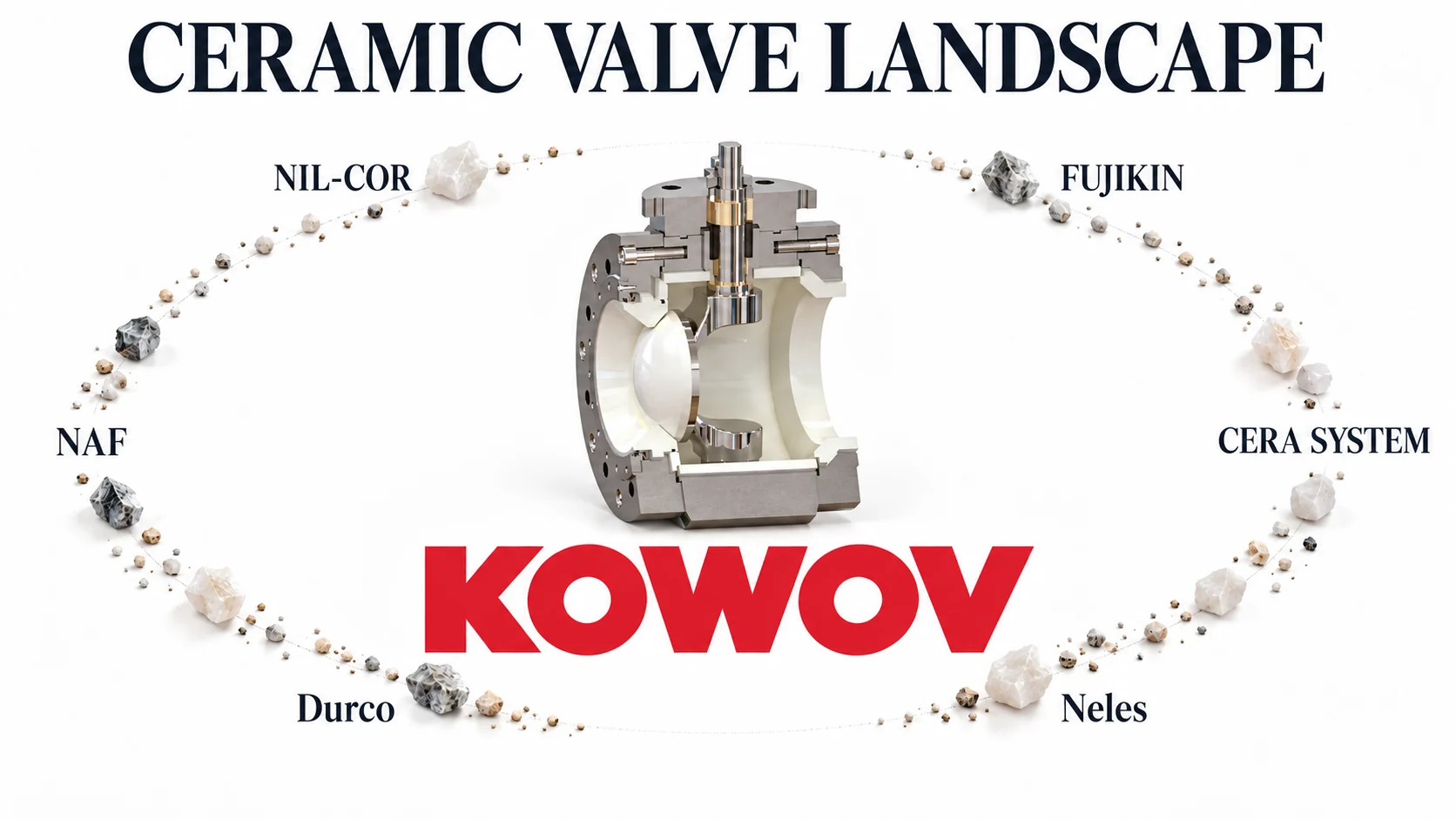
Ceramic and lined-valve products use several construction routes. Comparing the body, wetted parts and control arrangement makes the differences visible. The following brands provide useful examples before we look more closely at KOWOV's own designs.
| Brand | What to examine |
|---|---|
| NIL-COR | Ceramic-lined composite ball valves; compare the body construction and the specified service limits |
| FUJIKIN | COSMIX fine ceramic ball valves; inspect the wetted parts, control range and configuration |
| CERA SYSTEM | Ceramic ball valves, sliding valves and wear-protection components across several construction types |
| Neles | Series E ceramic ball control valves; compare the trim, body and actuator package for erosive regulation |
| Durco | A process-valve brand appearing in legacy replacement records; identify the actual model and lining rather than assuming every Durco valve is ceramic |
| NAF | Duball DL ceramic-lined ball valves for abrasive control; check the flow-path materials and duty envelope |
| KOWOV | Ball, C-type, slide and powder-feeding designs selected around the medium and the required movement |
A supplier's brand name cannot replace the model specification. Even within one range, pressure class, lining arrangement, secondary seals and control trim can change. Compare equivalent configurations at the same operating conditions before drawing a conclusion about price or service life.
Where KOWOV's designs differ
For a conventional abrasive or corrosive slurry duty, the FCCV1 ceramic ball valve is a starting point. Where the duty adds elevated temperature, pressure and differential pressure, the FCCV5 provides a different construction to review.
For material that cakes, crystallizes or contains large particles, the FCRV ceramic C valve uses a supported C-shaped rotor. Its geometry is intended to keep the stem outside the main erosion path at small openings. The FCCV6 single-seat valve addresses material retention through a different seating and cavity arrangement.
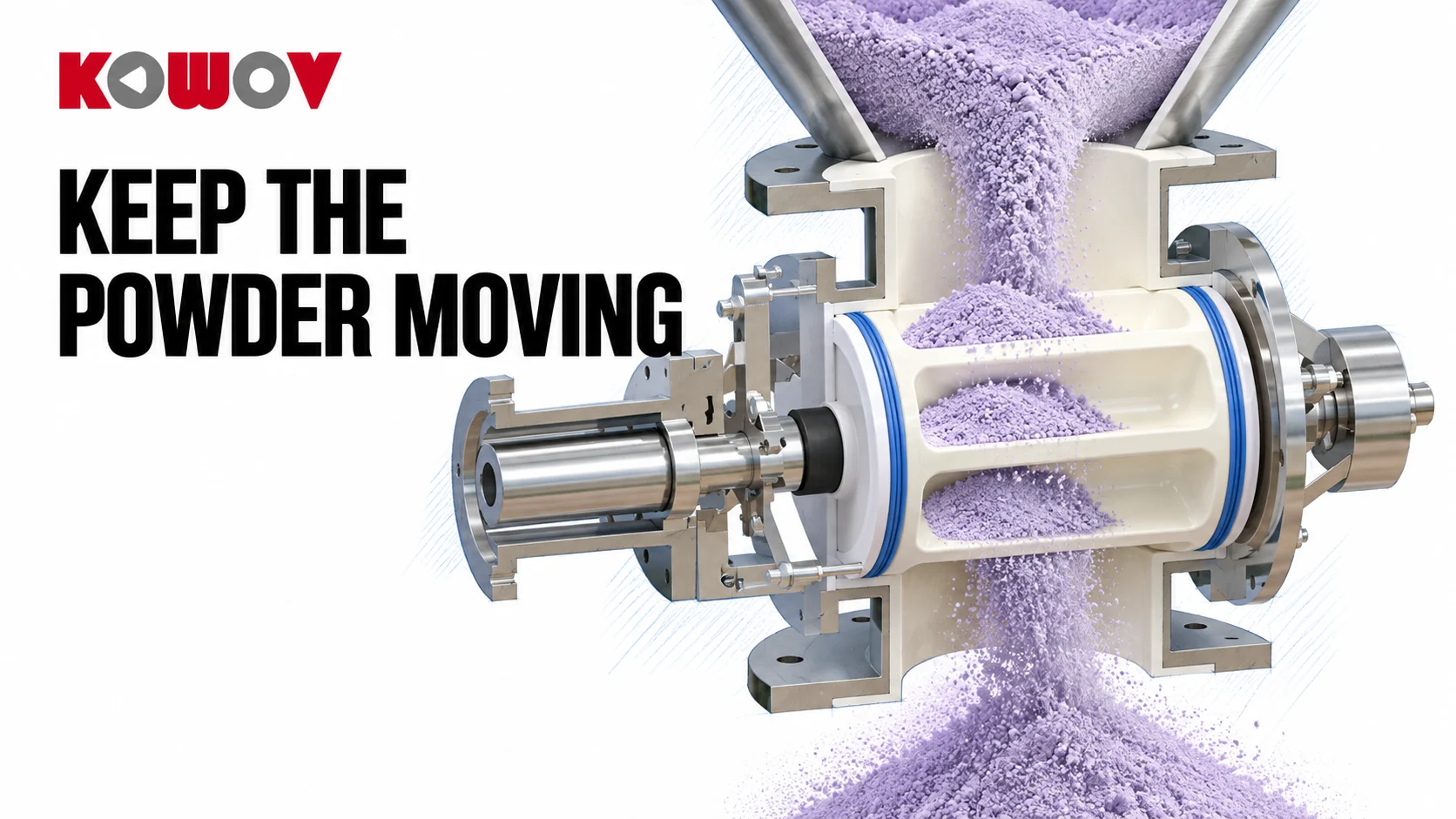
For erosive regulation, the FCSV ceramic slide valve separates the valve opening from the pipe opening to reduce direct attack on the sealing surfaces. For powder metering, the ESFV1 rotary feeder uses rotor speed and pocket volume to move material through the device.
These distinctions make KOWOV's range useful. The discussion can move from “use ceramic” to a specific explanation of the flow path, particle behavior and sealing requirement.
Read the cases for the decision they reveal
The resin reactor case shows why a ceramic ball can still fail when polymerizing material accumulates inside the valve. The foundry sand account records a first trial that jammed, followed by a change in ceramic composition and structure. The gasification project explains a move from C-type trim to a sliding design at erosive black-water positions.
These accounts are more useful than a universal lifetime multiplier. They connect a failure mechanism to a design response and an observed inspection or service interval. A result from one process remains a reference for selection, rather than a promised outcome at another plant.
Put evidence into the enquiry
There is also a standards basis for asking better questions. The Chinese Mechanical Engineering Society's publication notice identifies T/CMES 20023—2025, Ceramic Ball Valves: Technical Specifications and Quality Grading, and lists Yantai Jintai Meilin among the organizations that jointly developed it. Its stated scope includes materials, technical requirements, tests and quality grading. Participation in a standard is distinct from certification of an individual product.
For your own project, provide the failed valve's model, photographs, medium composition, solids content, temperature, pressure difference and required flow range. Identify whether the valve must isolate, regulate or meter powder. Ask for the proposed wetted materials, leakage acceptance conditions, actuator selection and inspection plan.
That gives KOWOV a concrete basis for recommending a product and preparing a quotation. It also gives your team something specific to check when the valve reaches the plant.
Discuss your application
Compare the construction with your medium, solids and operating conditions