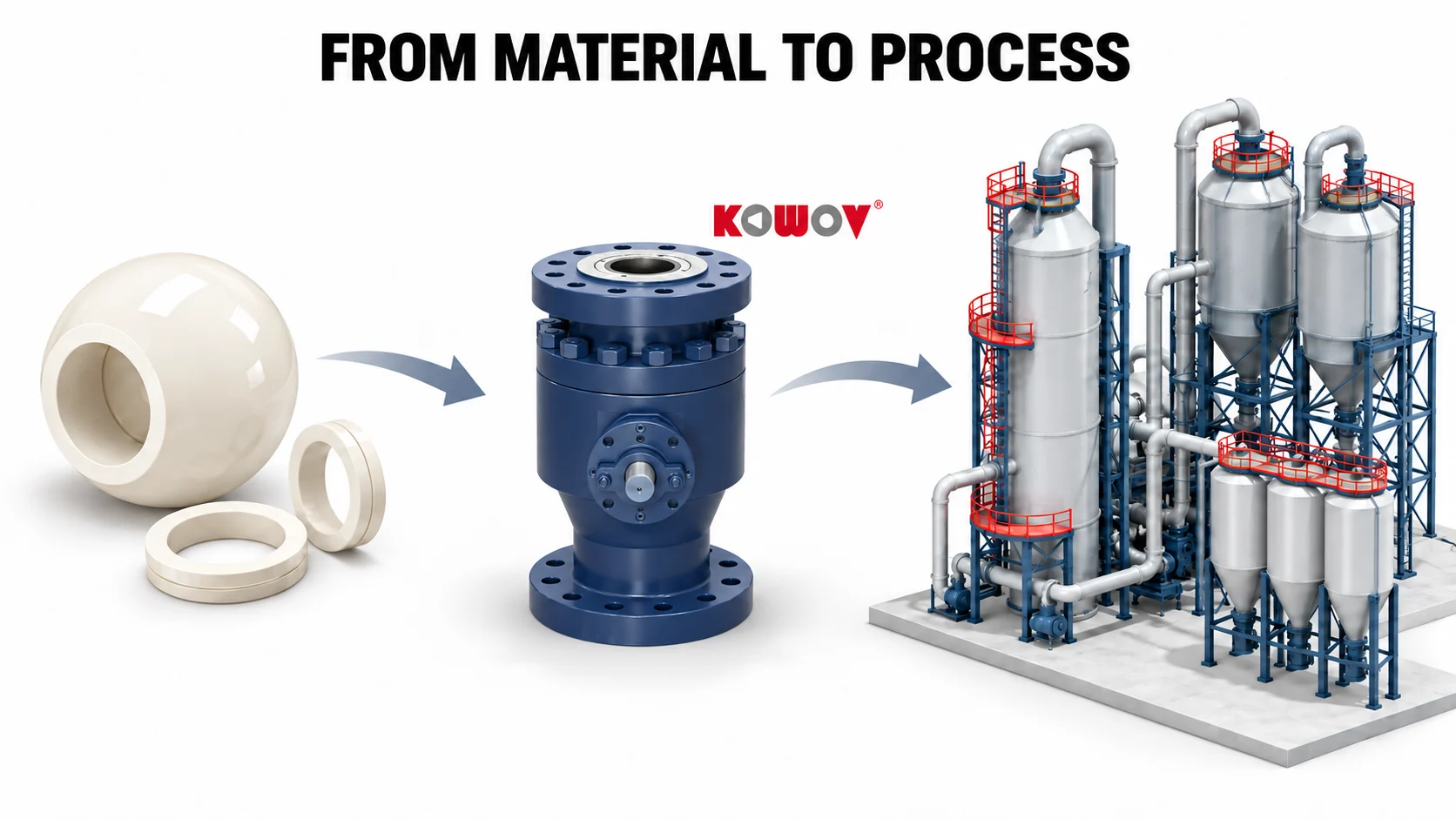
The origins of ceramic ball valves
How developments in ceramic materials, precision machining and sealing design opened a new path for industrial flow control
On this page
A slurry can wear a valve without ever exceeding its pressure rating. Hard particles repeatedly cross the same narrow opening, the sealing surface changes shape, and a valve that still moves correctly begins to leak. That mismatch between a sound pressure boundary and a damaged flow path explains why engineers started putting structural ceramics inside industrial valves.
The useful history begins with that problem. Ceramic valves emerged from efforts to make the surfaces exposed to abrasive, corrosive media last longer. Turning a hard material into a dependable sealing pair then required advances in powder processing, component geometry, precision grinding and assembly.
A problem at the sealing surface
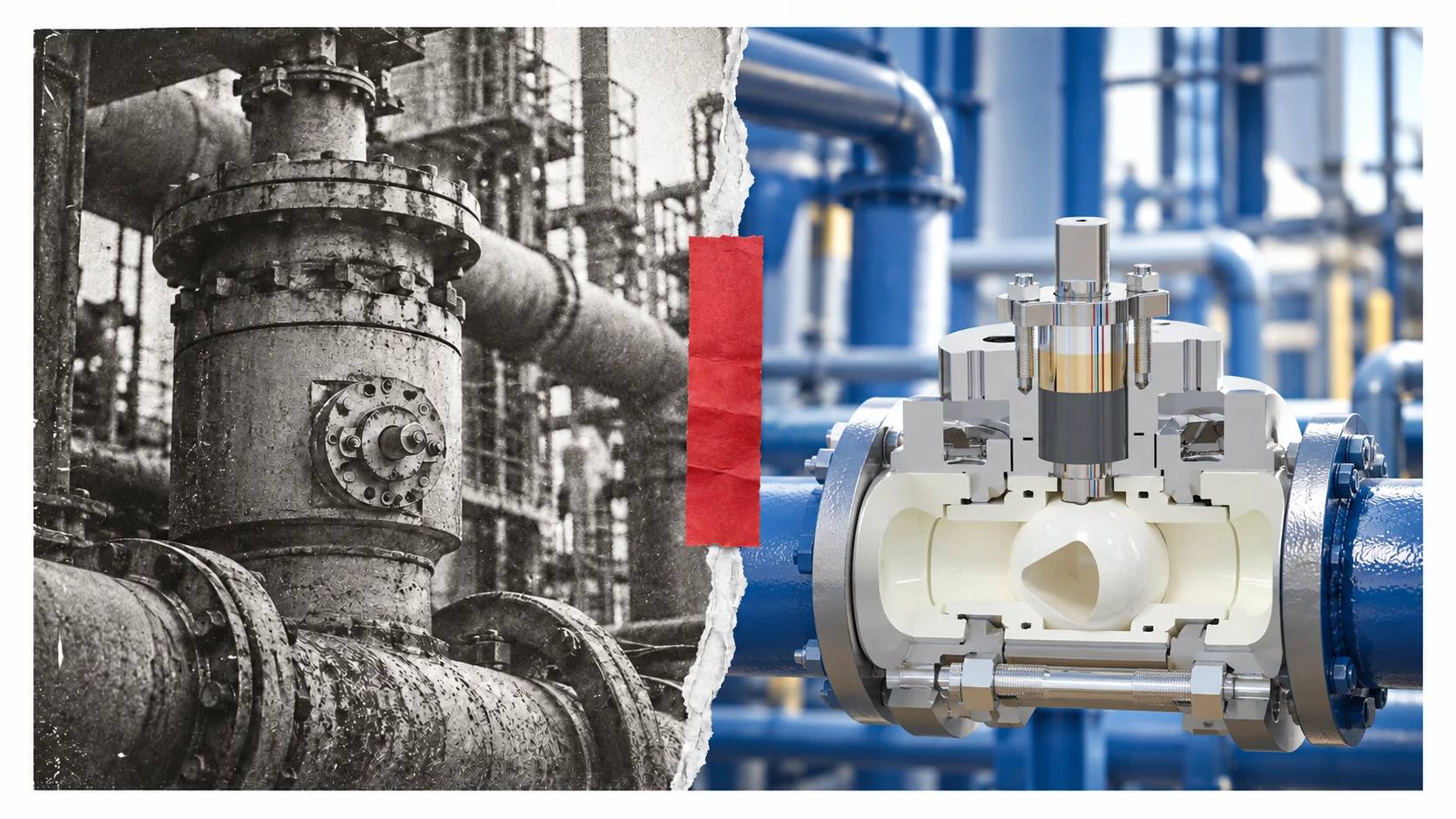
In a ball valve, the ball and seat must retain a closely matched contact surface. A small groove can become a leakage path. In slurry service, particles may strike that surface during throttling or enter the contact area as the valve closes. Corrosion can further alter the exposed material, depending on the liquid chemistry.
A tougher metal, a hard coating and a ceramic component offer different ways to address the problem. Coatings depend on their bond to the substrate and on the condition of the material underneath. Structural ceramic trim puts the wear-resistant material through the working component itself. That changes the failure mechanisms engineers must assess; it does not make the whole valve immune to damage.
Why industrial ceramics became practical
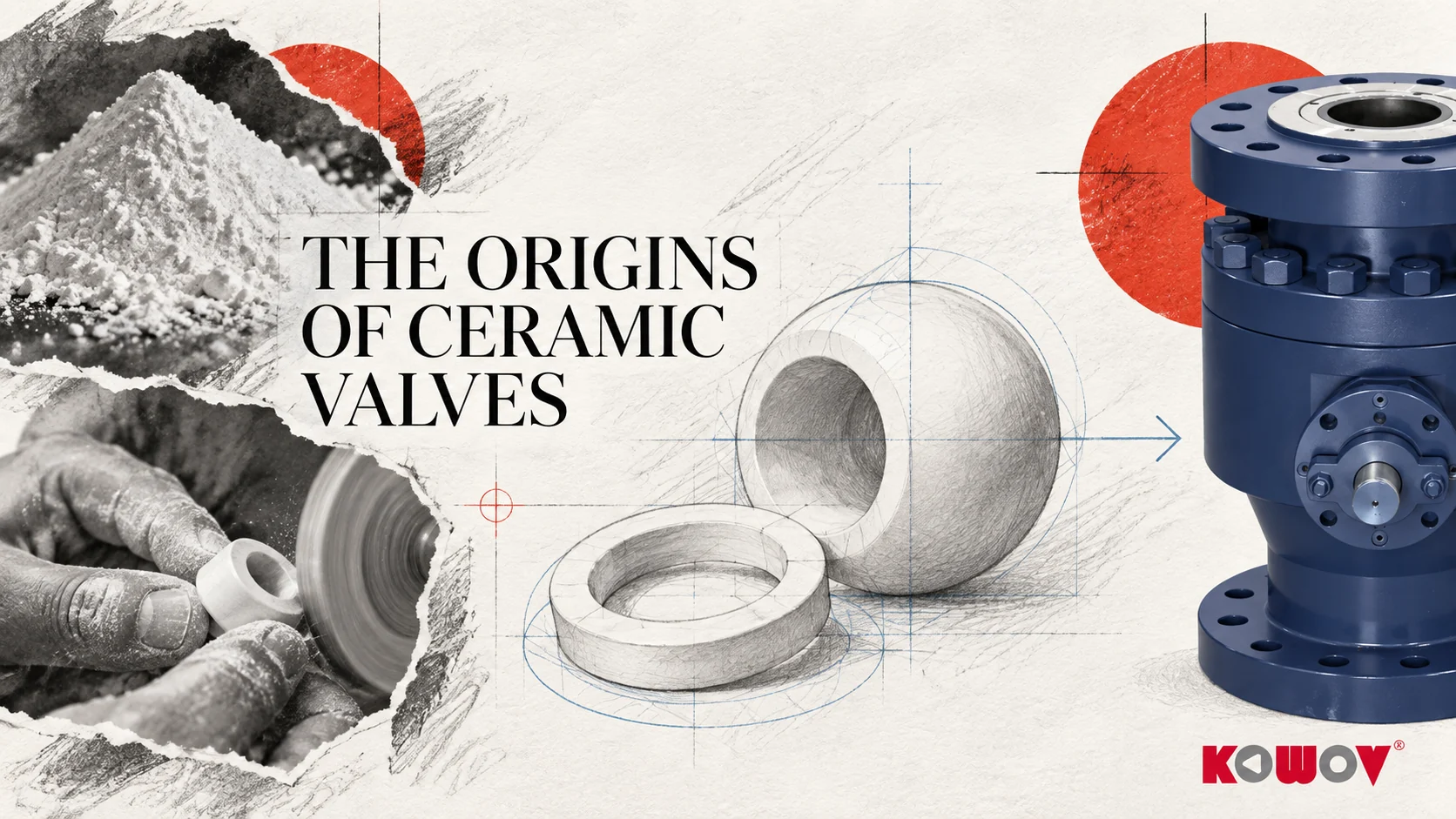
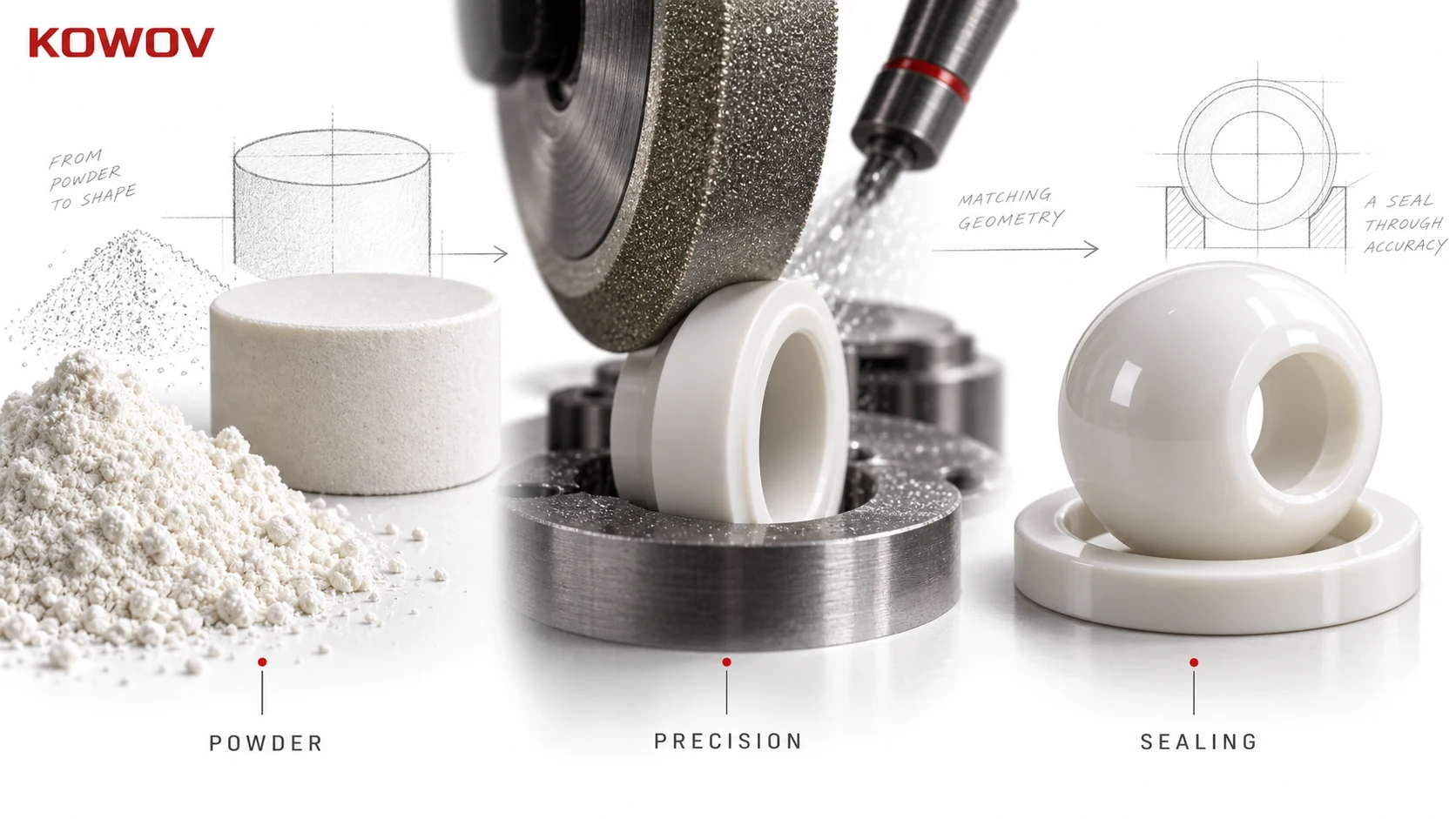
Engineered ceramics begin with controlled powders rather than the variable raw materials associated with everyday pottery. Composition, forming and firing influence the finished component. Grinding and lapping then establish the shape and surface needed for a valve ball, seat or lining.
Hardness helps a surface resist abrasion. Fracture toughness, thermal behavior and the way the ceramic is supported also matter. A ceramic seat that performs well in a steady slurry stream can still be damaged by trapped foreign objects, excessive assembly stress or an unsuitable temperature change. A useful design gives the material mechanical support and accommodates the loads imposed by the surrounding metal structure.
This is why a material name alone is a poor purchase specification. “Zirconia” or “alumina” identifies a material family. It does not establish the grade, component quality, sealing geometry or assembled valve performance.
An early application in desulfurization
Fujikin's published history offers a concrete example. Its engineers were addressing limewater and gypsum slurries in flue gas desulfurization, where abrasion and corrosion shortened the life of metal valves. The company worked with Kyoto Ceramics, now Kyocera, on fine ceramics for this duty. Its COSMIX catalogue dates the development of its fine ceramic valve to 1975. Fujikin's application history and COSMIX catalogue describe that route from a plant problem to a material change.
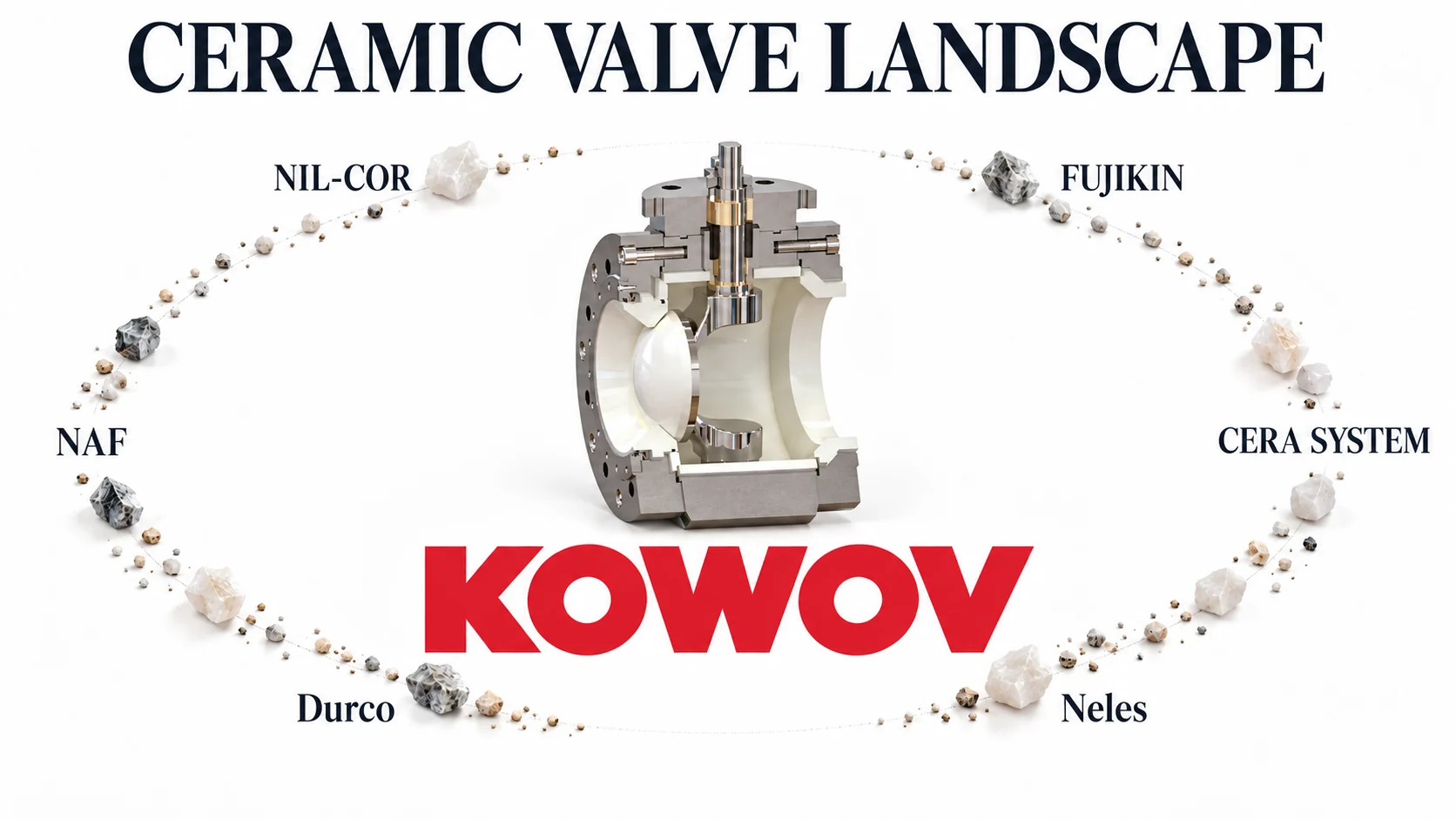
The significance is practical. Desulfurization needed both shutoff and flow regulation in a liquid carrying solids. The ceramic was doing a specific job inside an operating process. Other manufacturers subsequently developed different combinations of ceramic balls, seats and liners, supported by different bodies and sealing arrangements.
Those products should be compared at the level of the wetted parts and service conditions. A ceramic-lined composite valve and a metal-bodied ceramic control valve can share a material idea while serving very different pressure, temperature and control requirements.
KOWOV's route into the field
KOWOV's published company account traces its technical roots to ceramic ball valve development involving Jin Haojun in 1992 and the establishment of Yantai Jintai Meilin in 1998. These are different milestones: the earlier engineering work predates the company. The company history provides the wider context.
The product range has since developed around several recurring problems. The FCCV1 ceramic ball valve provides a starting point for corrosive, abrasive service. The FCRV ceramic C valve addresses duties involving buildup, crystallization and difficult particles. The FCSV ceramic slide valve uses a different relationship between the moving element, seat and flow passage for erosive regulation.
That development reflects a central lesson from the early material work: the ceramic and the valve architecture have to be considered together. A change in slurry behavior may require a different cavity, support arrangement or flow path even when the material family remains the same.
What the history changes for a buyer
A useful enquiry begins with the failed part. Photographs of a scratched seat, a cracked ball or a worn outlet lining tell a more precise story than “the valve did not last.” Add the medium, solids content, particle size, operating temperatures, upstream and downstream pressures, and the valve's normal opening range.
Then ask the supplier to explain how the proposed construction addresses that failure. Which surfaces are ceramic? Where can material collect? How is the ceramic supported? What leakage test and acceptance conditions apply? Those questions connect the history of the technology to a purchase decision that can be checked.
The next article, How ceramic valves reached process industries, follows that transition through slurry control, gasification and powder handling.
Discuss your application
Start with the working surfaces, the medium and the required valve duty