Two decades of ceramic valves in power plants
A historical account of ceramic control valves in China’s flue gas desulfurization systems
On this page
In a desulfurization system, a valve replacement is also a maintenance-planning decision. The next part must handle the slurry, fit the installation and remain serviceable through the intended operating period. Spare parts and support matter when the valve is part of a plant that has to keep running.
KOWOV's historical power-industry account brings together several Chinese power-plant applications, beginning with replacements in the mid-2000s. The useful thread is how ceramic trim became part of a repeatable maintenance approach.
The duty stayed abrasive
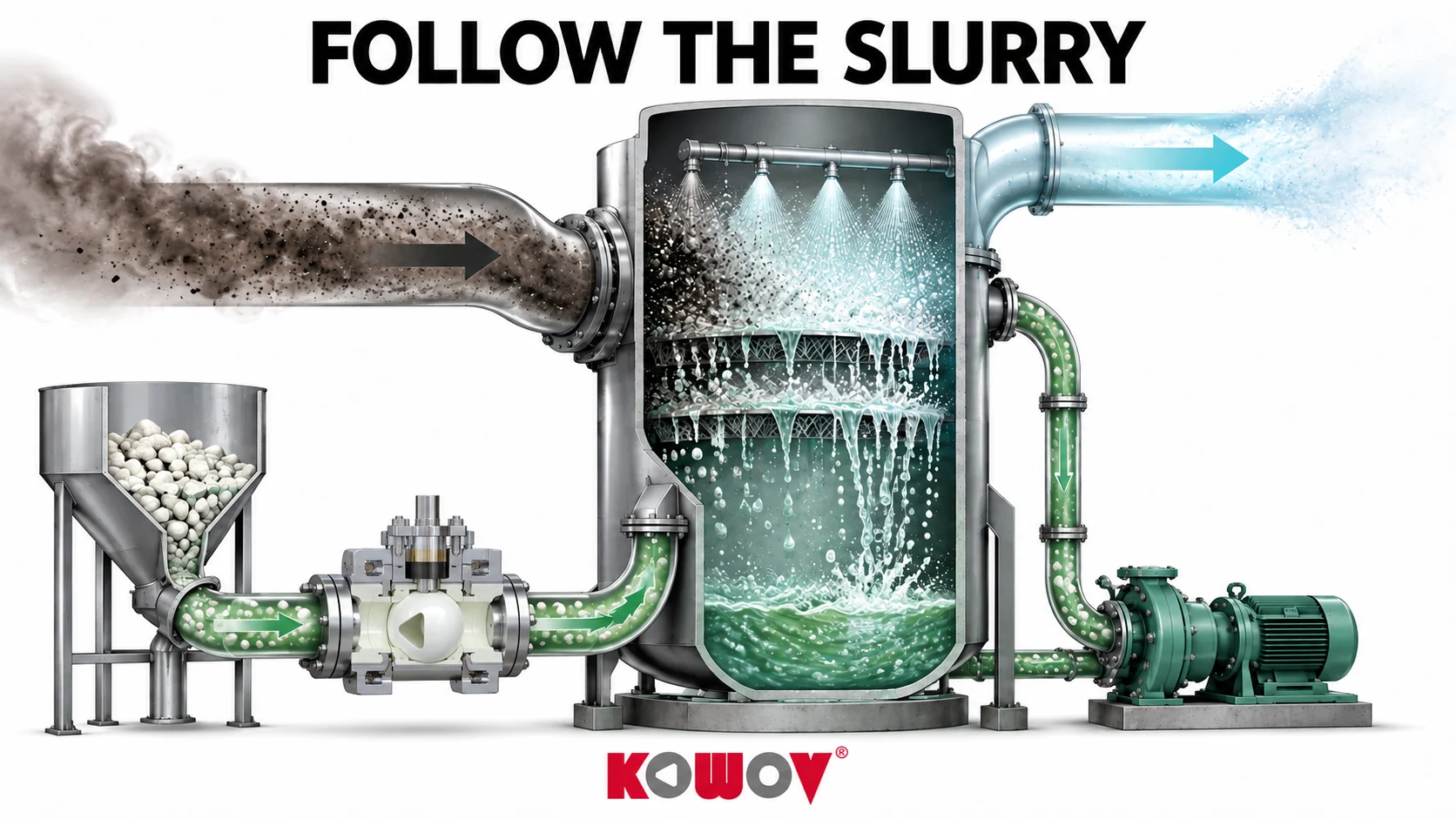
Wet flue gas desulfurization involves water streams and slurries containing materials such as limestone and gypsum. Different valve positions encounter different solids loading and chemical conditions. A feed control valve, a drain and a process-water isolation valve should not be treated as one identical service.
The ceramic sealing surfaces address wear and compatible corrosive media. The valve architecture and control arrangement still have to match the position. For procurement, the first step is to separate the duty schedule into applications that can be meaningfully compared.
What the plant accounts describe
The historical report records KOWOV ceramic valve replacements at Luohuang in 2005 and Ninghai from 2007. It also describes later work at Nantong, Lianyuan and Ledong. Across the accounts, maintenance interval and the cost of replacing imported equipment were recurring reasons for considering alternatives.
The accounts share a practical adoption pattern: try a replacement at a troublesome position, inspect it, and expand when the maintenance record supports the decision. Each plant's operating conditions remain the basis for interpreting its results.
A more detailed wet desulfurization case follows one plant from a DN100 limestone-slurry trial in July 2008 through later orders and spare-parts support. That sequence gives a clearer picture of how adoption developed than a list of customer names alone.
Keep the comparison at valve-position level
For a replacement programme, record the existing model, function, leakage requirement, face-to-face dimensions, actuator interface and actual operating conditions. A lower purchase price has limited value if a different control characteristic or connection detail creates additional work at installation.
The FCCV1 ceramic ball valve is a relevant starting point for suitable abrasive and corrosive duties. The FCRV ceramic C valve provides another route where buildup and regulation are central. The historical plant list does not identify every installed model; a current recommendation needs the position data.
What makes a long service record useful
Long service should be connected to inspection findings and maintenance history. A valve still installed in the line, a valve operating without intervention and a valve that has passed a defined leakage test represent different kinds of evidence.
Keep those records by valve position and date. They make later expansion easier to justify and help KOWOV identify whether the same construction remains appropriate when the slurry or operating cycle changes.
Discuss your application
Review a replacement against the actual desulfurization valve position