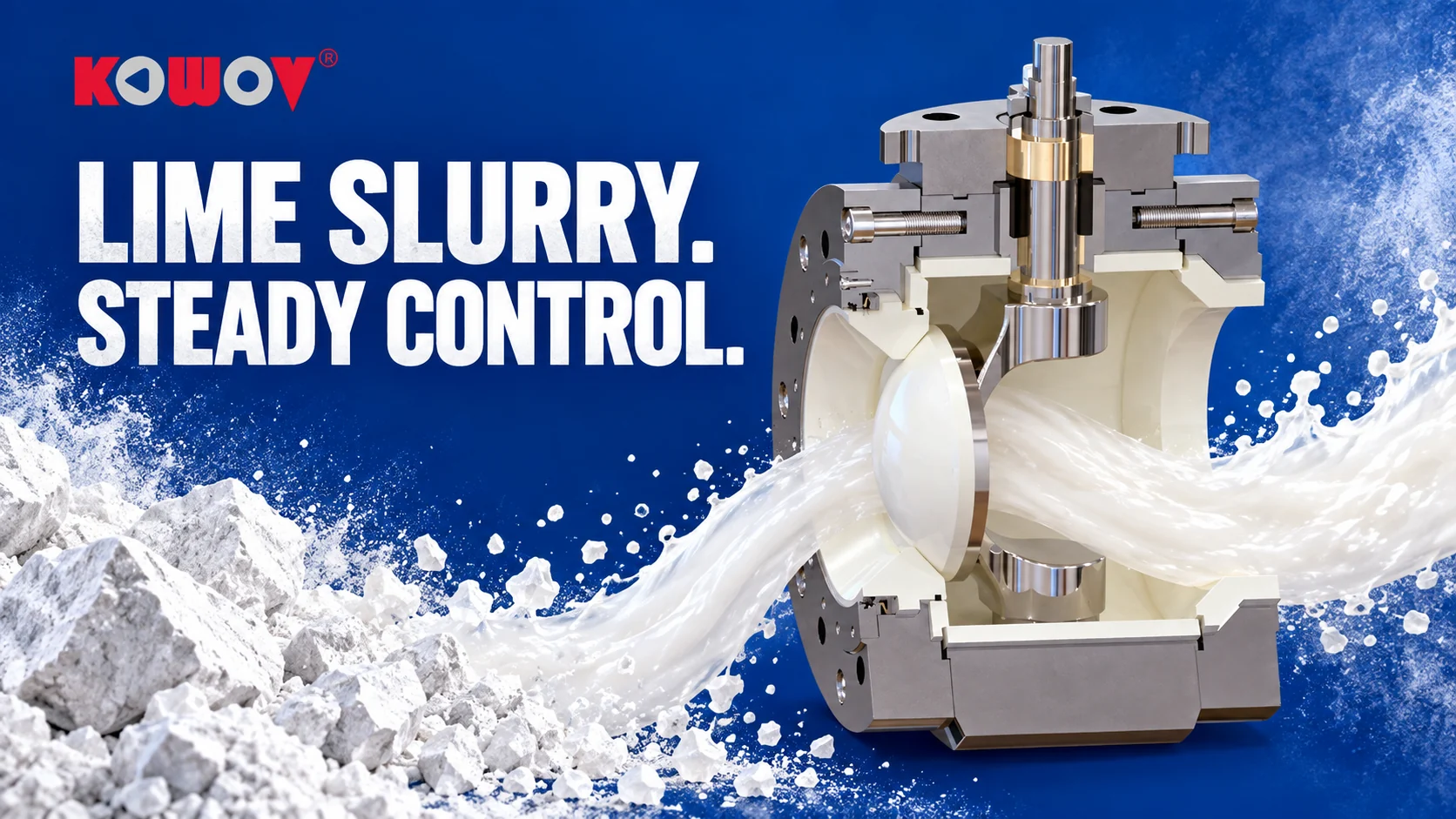
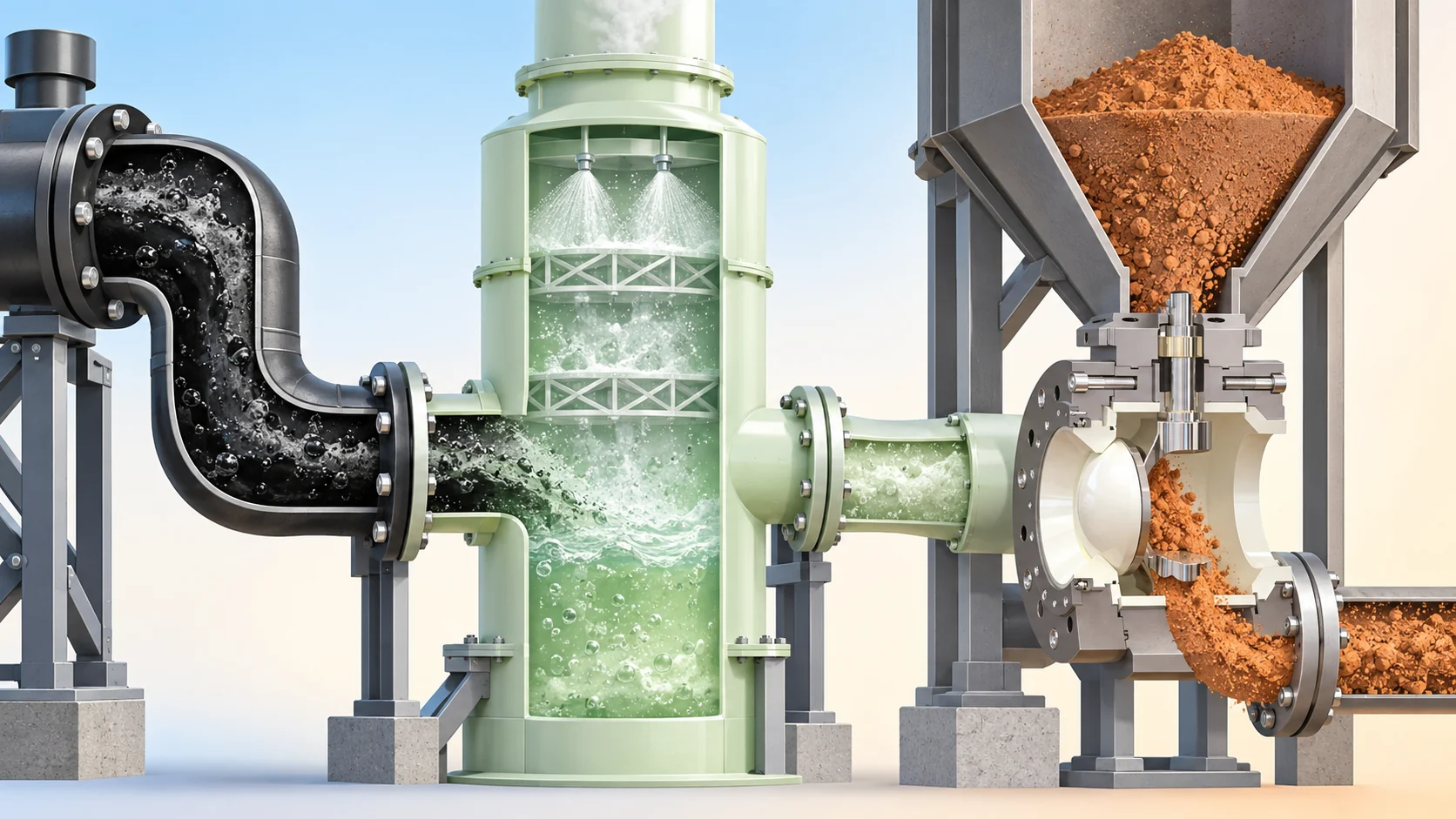
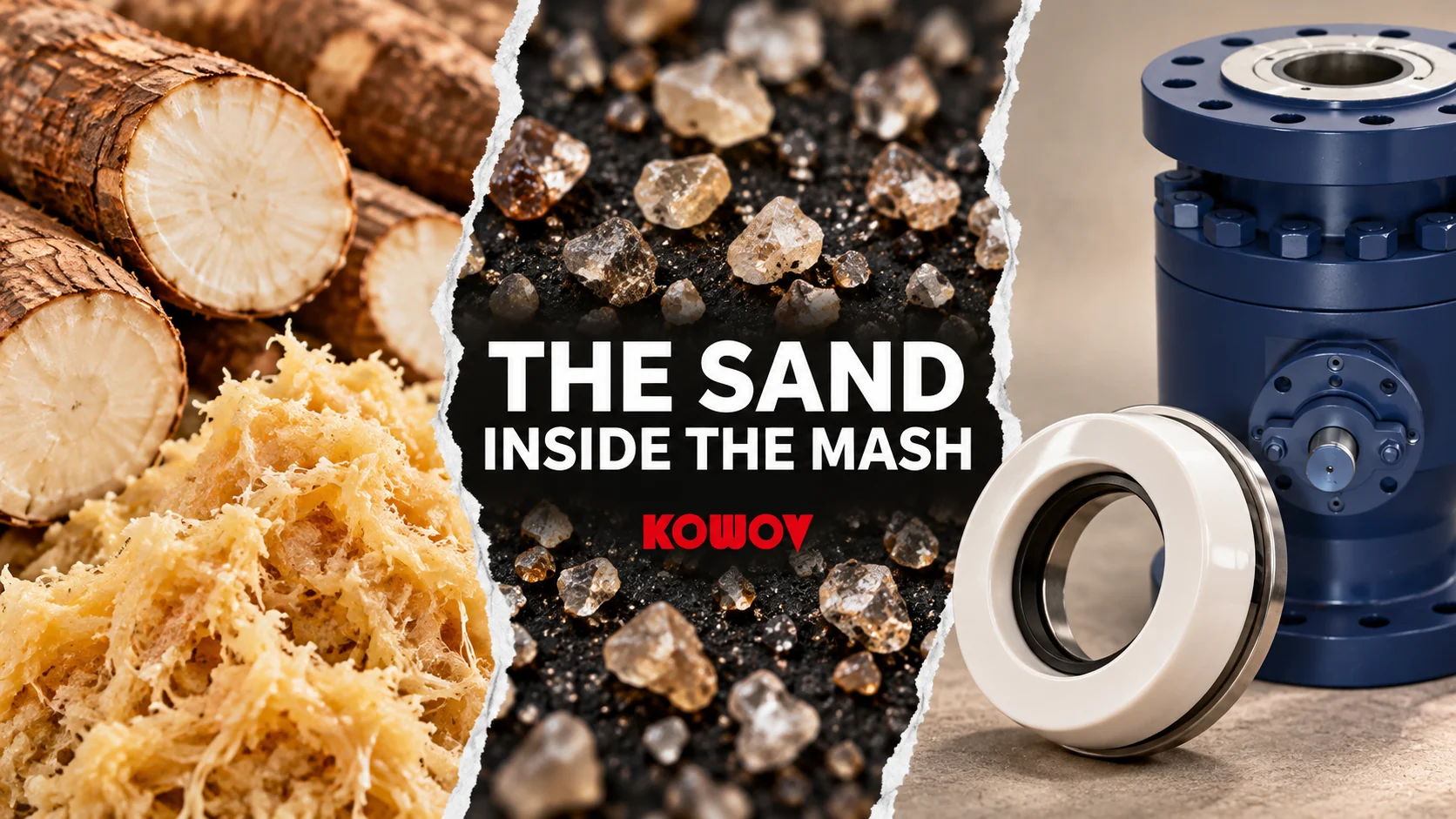
Why a resin reactor needed a different valve core
The material was already ceramic. Solving blockage and ball damage meant looking again at the cavity, the seat and the way resin leaves the reactor
On this page
The reactor already had a ceramic valve. It still blocked, leaked internally and sometimes suffered a fractured ceramic ball. For the new-materials producer in Anhui, changing to a harder trim material could not explain a solution: the material was already hard.
The question was what happened to the slurry left inside the valve. KOWOV's account of the project shows how a closer look at self-polymerizing resin led to a change in seating arrangement and, later, the shape of the closure.
The material that stayed behind
In 2019, the plant reported recurring problems with a reactor-bottom isolation valve. The slurry contained hydrochloric acid and could polymerize. Internal leakage affected batch quality, while blockage required cleaning. A fractured ceramic component could contaminate the material in the reactor.
The existing valve used a bidirectional sealing ball arrangement. Site investigation identified retained material in internal spaces as the central problem. As deposits formed, they interfered with movement and loaded the ball and seat in ways that normal flowing service did not.
The failure therefore involved both chemistry and geometry. The wetted materials had to suit the slurry, and the internal arrangement had to reduce opportunities for that slurry to remain and harden.
From the seat arrangement to the C core
KOWOV recommended a single-seat bottom-isolation construction. After a six-month trial, the customer adopted the arrangement in a new project in June 2020. The account then describes continued development from a ball-type closure toward a ceramic C-type core.
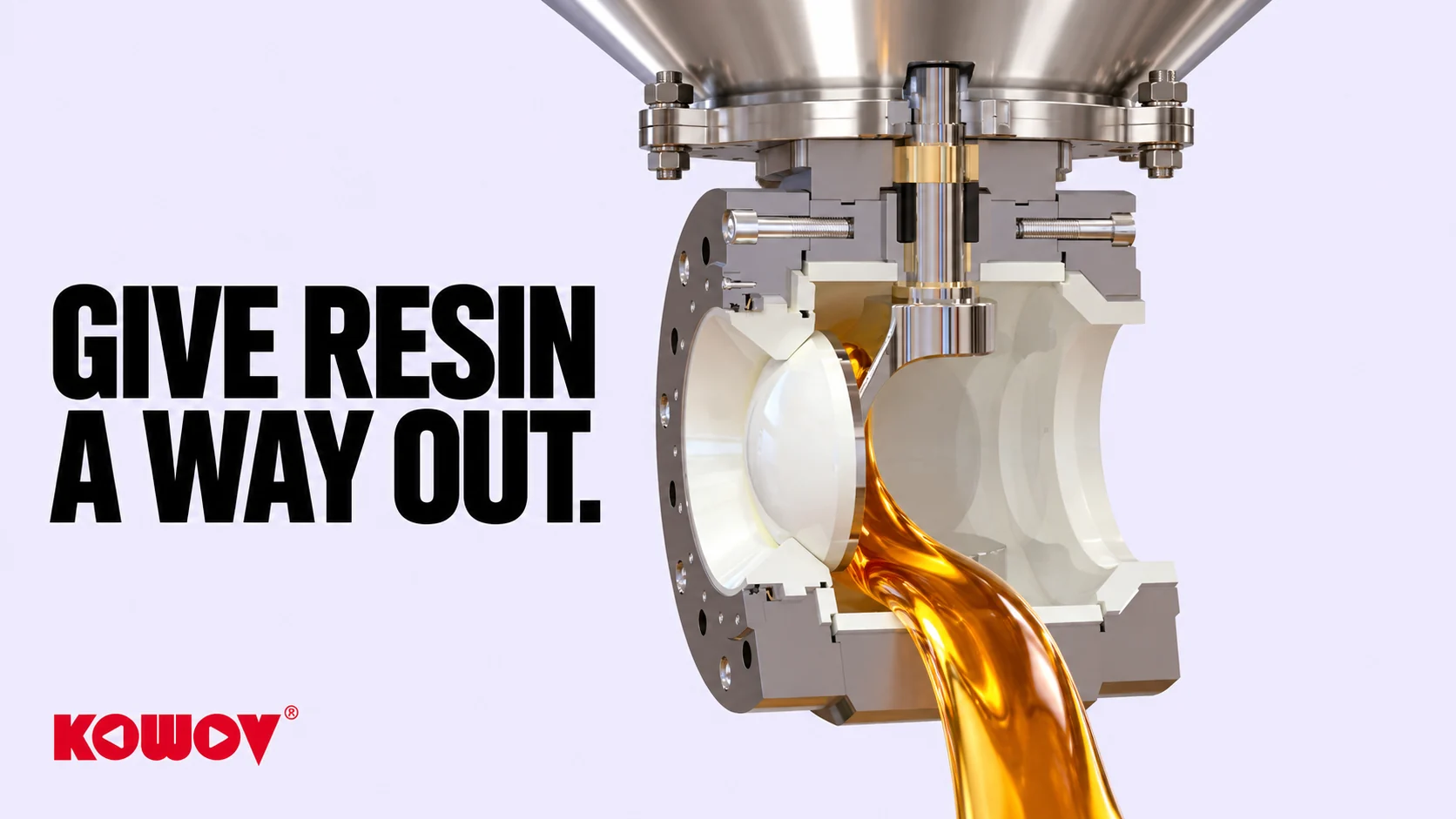
The current FCCV6 single-seat ceramic ball valve and FCRV ceramic C valve explain the two design ideas relevant to this story. They are separate catalogue constructions. The original report does not supply a complete model or configuration record for every stage of the reactor-bottom development.
The FCRV uses a concentric C-shaped rotor with upper and lower supports. Its passage and supported geometry are intended for viscous, caking, scaling and crystallizing media. For reactor service, the exact discharge arrangement, seat direction, cleaning procedure and batch conditions still need to be reviewed.
What the operating comparison can tell us
The published comparison records a cleaning interval of twelve months for KOWOV's C-type arrangement, compared with three months for the previous ball-type valve. That interval describes this application; cleaning requirements remain tied to the resin and the operating cycle.
For the plant, the useful change was less frequent intervention at a position that had repeatedly retained material. For a new trial, record both the time between cleaning and the work needed at each stop. These measures show whether the discharge path is staying clear in day-to-day operation.
Similar resin does not mean identical conditions
The account records another application in Zhejiang in 2023 and a further trial in Inner Mongolia in 2024. The latter required adjustments after initial adaptation issues. KOWOV subsequently received the bottom-valve package for the customer's 2025 project.
That follow-up is important. Small differences in the process can change deposit formation and valve behavior. The engineering work continued after delivery, using the trial to refine the construction for the actual material.
For a reactor-bottom enquiry, provide the slurry chemistry, solids, temperature cycle, viscosity behavior, cleaning method and the available installation space. State how leakage affects the batch and what acceptance test is required. Photographs of accumulated material are especially useful because they show where the next design must improve the discharge path.
Discuss your application
Review the reactor discharge path, deposits and required shutoff