From black water to boiler ash
A Shaanxi plant’s experience across three duties led to a closer look at the ceramic C-type valve for pneumatic ash conveying
On this page
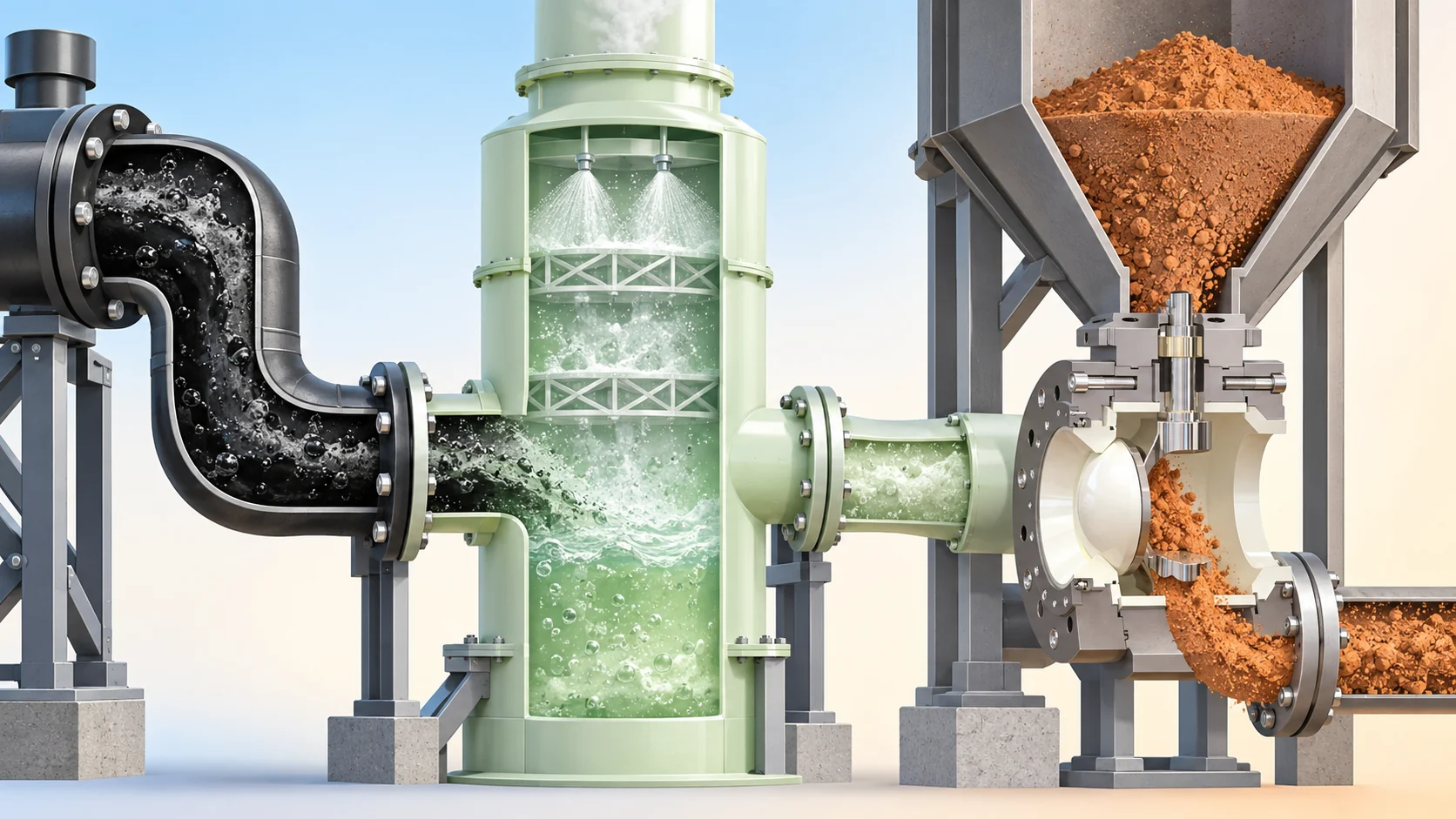
The ash-conveying trial began with experience from two other parts of the plant. The customer had already used KOWOV valves in black water and desulfurization service. When boiler ash caused repeated wear, those earlier installations gave the team a reason to discuss another application.
The eventual choice was the FCRV ceramic C valve. KOWOV's account follows the route from the plant's earlier duties to a dated ash-conveying trial and subsequent orders.
Two earlier duties built the service history
In 2016, the plant introduced DN150, Class 300 ceramic control ball valves in its black-water system. The account reports approximately eighteen months of service before a pipeline upgrade to DN400 changed the installation. That was a process modification, rather than a recorded wear failure.
In 2017, DN50, Class 150 ceramic control valves entered the thermal-power workshop's desulfurization and denitrification upgrade. The source describes more than five years of stable operation, with packing replacement recorded as part of maintenance.
These results related to separate duties. They provided a service relationship and technical starting point, but they did not by themselves select the valve for pneumatic ash transport.
Ash changed the wear problem
At the beginning of 2021, changing coal sources and ash conditions made the boiler conveying duty more difficult. The plant reported severe wear and leakage in its earlier dome and swing-valve arrangements within about six months.
KOWOV reviewed the ash characteristics and the operating conditions with the site. The proposed C-type construction addressed the need for a wear-resistant sealing arrangement and reliable movement with particles.
The current FCRV product uses a supported C-shaped rotor and is intended for on-off and control duties involving caking, scaling, crystallization or large particles. Its suitability for a particular pneumatic-conveying position also depends on the pressure cycle, medium and operating sequence.
The dated trial record
The first ceramic C valves entered service in July 2021. The account describes inspections during quarterly boiler maintenance and reports satisfactory sealing and no visible wear after the first year.
The customer purchased three additional units in 2022. By the August 2024 follow-up, all four valves were reported to be operating without failures. That is the recorded status at that date; a projected lifetime beyond five years remains a forecast.
What to compare in a new ash application
Include the ash particle characteristics, conveying pressure, cycle frequency and the sequence of filling, pressurizing and discharge. Record whether the earlier failure was seat erosion, external leakage, obstruction or an actuator problem.
For the trial, agree how movement, shutoff and wear will be inspected. Keep packing work and other maintenance in the record even when the ceramic components remain sound.
The lime-conveying account offers another dry-solids example. Together, the cases show why the product's structure should be matched to the material and cycle before KOWOV prepares the quotation.
Discuss your application
Discuss an FCRV configuration for your ash-conveying cycle