Keeping lime moving in hot metal pretreatment
Moisture-sensitive calcium oxide changes the valve problem: abrasive transport must be considered alongside buildup and sealing
On this page
The valve in this story handles lime for hot metal pretreatment. It does not carry molten iron. That distinction changes the selection problem: the valve must manage an abrasive powder that can react with moisture and form deposits.
KOWOV's application account describes a steel producer that introduced ceramic valves in 2019 after frequent replacement of the earlier metal-seated construction. The reported operating experience points to both wear resistance and the need to understand the condition of the lime.
When dry powder becomes a deposit
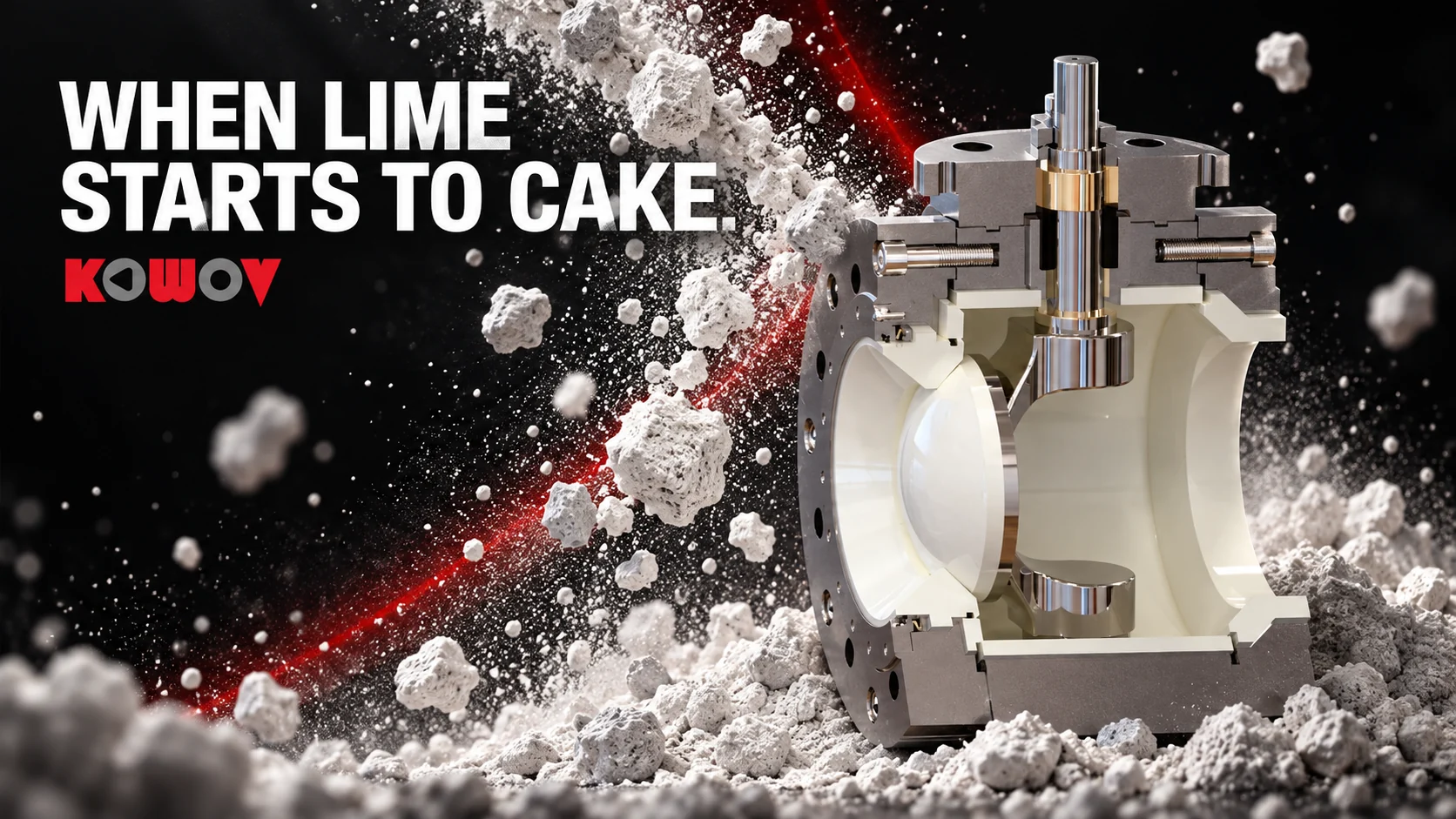
Quicklime, calcium oxide, reacts with water to form calcium hydroxide. Moisture exposure can therefore change the material being conveyed, contributing to agglomerates and buildup. Material lodged near the sealing surfaces can obstruct movement and increase the load required to operate the valve.
A valve's closing action may then force hard particles across the sealing pair. That can damage the surface or produce an abnormal torque requirement. Increasing actuator force without understanding the obstruction does not resolve the underlying material problem.
The enquiry should describe the condition of the powder as it reaches the valve: moisture, particle size, conveying method, pressure cycle and any observed caking. The upstream handling arrangement can be relevant to a problem first noticed at the valve.
The ceramic trial and its follow-up
The published account records a 2019 collaboration with a steel enterprise and a subsequent four-year operating history for the ceramic valves. It contrasts that result with an earlier replacement interval of about two months.
The service interval gives the plant a reference for the next replacement. A current proposal should establish the geometry, material grade and actuator requirements for the lime as it is actually conveyed.
Match the construction to particle behavior
The FCRV ceramic C valve is a relevant current design to discuss where caking or large particles interfere with movement. Its supported C-shaped rotor and flow-path arrangement are intended for difficult media. The FCCV1 ceramic ball valve provides another starting point for suitable abrasive service.
Material hardness addresses only one part of the problem. The supplier also needs to explain where powder can collect, how the sealing surfaces interact with particles and what operating sequence the proposed assembly requires.
Inspect deposits as carefully as wear
A useful trial record includes the valve's movement and leakage behavior, alongside photographs of the interior at the planned inspection. Record any change in powder moisture or conveying conditions during the same period.
The pneumatic ash-conveying case offers a related example of moving from a recurring wear problem to a ceramic C-type trial. Both stories show why dry-solids service needs a process-specific review rather than a material substitution alone.
Discuss your application
Discuss the lime condition and pneumatic-conveying cycle