When erosion meets corrosion in phosphorus processing
A phosphorus producer’s neutralization expansion shows why the medium and its solid particles must be considered together
On this page
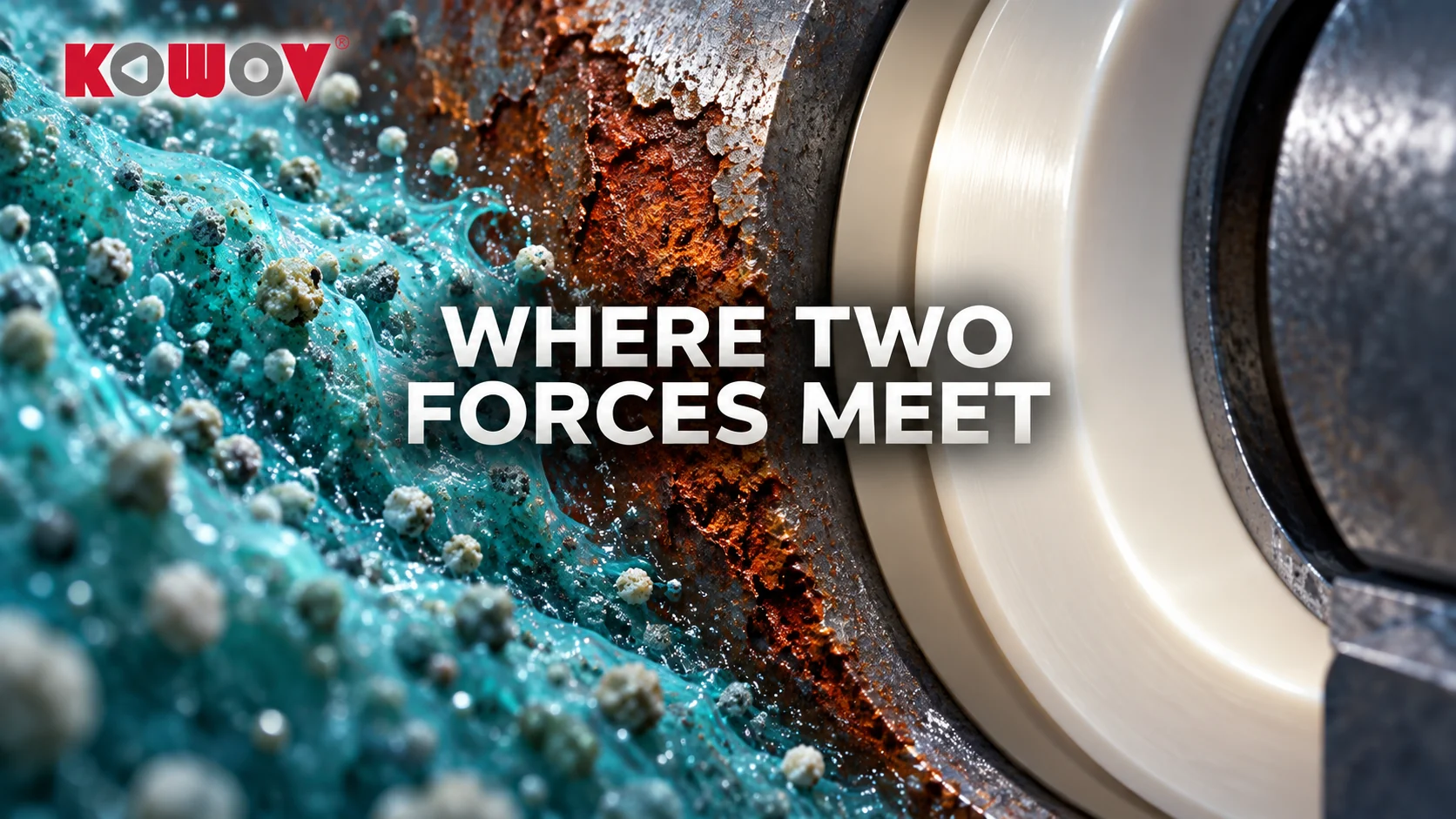
In phosphorus processing, a damaged valve surface can tell two stories at once. Liquid chemistry attacks exposed material, while suspended particles repeatedly strike or scrape it. A valve selected for only one of those mechanisms may fail well before the next planned shutdown.
KOWOV's application account describes a phosphorus producer in Sichuan that introduced ceramic valves during a neutralization capacity expansion in 2020. The useful part of the story is the relationship between the medium, the damage and the material change.
Why corrosion and erosion must be reviewed together
Phosphate-rock slurry and wet-process phosphoric-acid streams can combine solid particles with aggressive liquid chemistry. The original account identifies erosion of balls and seats, chemical attack on metal surfaces and rapid loss of reliable shutoff in difficult positions.
The mechanisms can interact. Erosion can remove a protective surface layer, exposing material to the liquid again. Chemical attack can change the surface that the particles then strike. Their combined effect needs to be assessed for the actual alloy or ceramic grade, rather than assumed from a generic corrosion-resistance label.
Neutralization also changes the process mixture. Solids may form as conditions change, and deposits can interfere with the moving parts. The concentration, temperature and suspended material at the valve position matter more than the name of the finished phosphorus product.
What changed in the 2020 expansion
The published account reports that earlier metal valves lasted weeks or months in the more severe positions, while the ceramic replacements exceeded two years of service. It also reports lower maintenance demand after the change.
The longer interval changes the purchasing calculation. A valve's installed cost includes replacement parts, maintenance hours and the production interruption needed to reach it. Compare those costs over the same operating period and at equivalent duties.
For the next expansion, the important step is to match that material choice to the new duty. The liquid composition, solids, pressure drop and tendency to crystallize determine which current construction should be considered.
Choose the working surfaces and the cavity together
For corrosive, abrasive slurry within the relevant service envelope, review the FCCV1 ceramic ball valve. Where crystallization or retention dominates, the FCCV6 single-seat valve and FCRV ceramic C valve provide different geometries to evaluate.
The ceramic grade must be checked against the complete chemical mixture. The secondary seals and any exposed metal also belong in that review. High product-purity requirements add another question: which surfaces could contribute contaminants during normal wear or an upset?
For a control position, include the normal opening and flow range. A design that offers acceptable shutoff may still need a different trim arrangement to regulate a particle-bearing stream over the required range.
Turn a failure report into a selection brief
Keep photographs of the worn parts and distinguish pitting, directional erosion, deposits and fracture. Record the medium composition at the valve, solids content and size, temperatures and both sides of the pressure drop. Explain whether the failure appears during steady operation, startup, cleaning or closure.
KOWOV can use that information to compare constructions and propose a trial with clear inspection criteria. The related fertilizer circulation-pump case follows the same material problem at a phosphoric-acid control position.
Discuss your application
Discuss the complete phosphorus-process mixture and its wear pattern